

Weaker shells, longer cycles: what St Ewe's new Moba plant means for producers
Published on : 5 Jul 2026
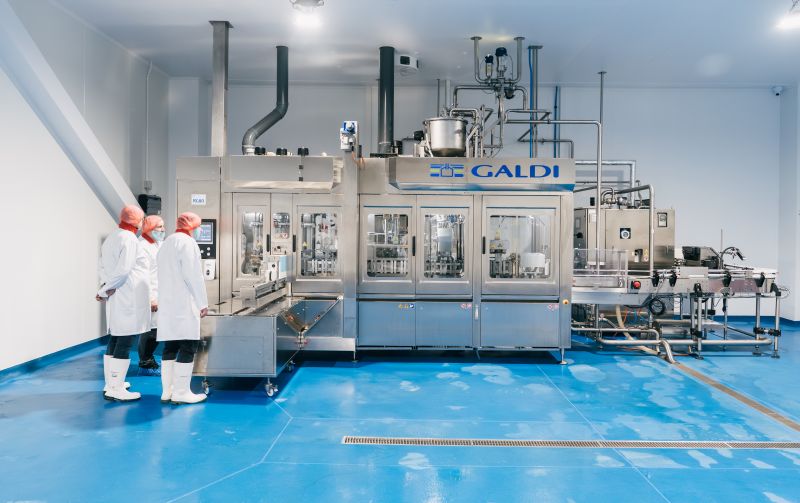
The plant is built around a Moba egg breaker — the first of its kind in the UK
The Ranger attended the London launch of St Ewe Free Range Eggs' new £13m pasteurisation and liquid egg facility in Cornwall, a plant founder and chief executive Bex Tonks says will widen the outlets available to the farms supplying her, not just the range of products coming out of the business.“We invested in this new unit for the love of food and to widen the producers' capabilities and de-risk our business and create amazing foods,” Tonks said. Of the £13m total, £3.5m came as a grant from Cornwall Council's Good Growth Fund. The company had already been supplying liquid egg for five to six years from a smaller unit before committing to the new facility, which launched in London on 30 June.What it means for the supply baseTonks was direct about the opportunity for producers: growth. “We're a brand that is growing, and in order to grow, we need to increase our producer base as well,” she said. “We really enjoy working with the farmers that we currently work with and we are looking to increase that number of farmers we work with moving forwards.”The scale of that ambition is significant. St Ewe currently works with 1.3 million birds and is aiming to double that flock size within three to five years. “It's enough to keep us busy,” Tonks said.The plant's other practical benefit to producers is on the laying cycle itself. Because pasteurisation doesn't require the eggs to survive retail handling and grading, shell strength becomes less important than it is for the shell egg market — which gives farmers the option of keeping flocks laying for longer. “It enables farmers to extend the laying cycle of their hens, keeping them on for longer,” Tonks said. “This is because shell quality is less important when it's going to be broken in a pasteurisation unit rather than the retail shell market.” Where a flock's eggs would otherwise struggle to make it through the delivery process undamaged, that output can be diverted into the pasteurisation line instead. Tonks was clear this isn't a use for substandard eggs: “We are actually using Class A eggs because quality is quite key here, so it's not necessarily a by-product.”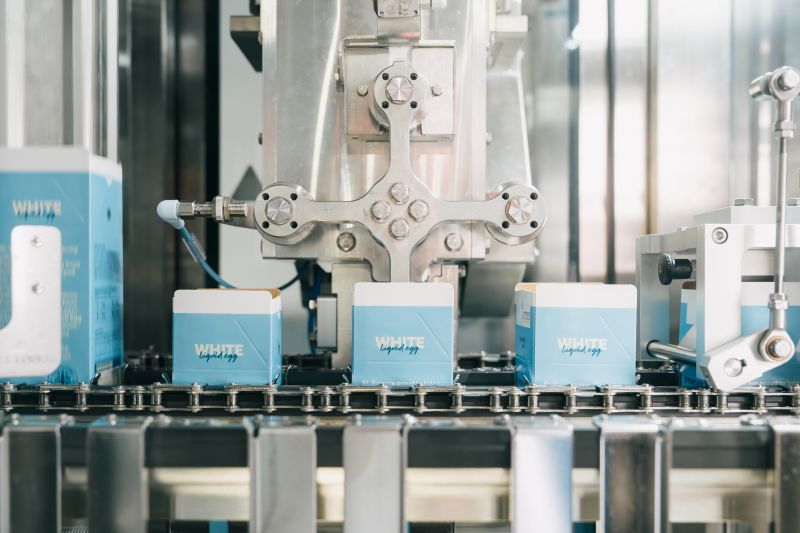
The plant is capable of breaking 72,000 eggs an hour, equivalent to 20,000 tonnes of liquid egg a week at full production
The equipment and output capacityThe plant is built around a Moba egg breaker — the first of its kind in the UK, according to Tonks — capable of breaking 72,000 eggs an hour. The pasteurisation system itself can process up to four tonnes of whole egg an hour, comfortably supporting around 20 tonnes of liquid egg product a week at full production; actual throughput varies with the viscosity of the end product, since customers can specify additions such as sugar, salt, milk, alcohol or water.The pasteurisation itself runs on Moba's PelboPure system, which Tonks said was chosen for five specific performance claims: the highest possible bacterial reduction, giving the longest shelf life; strong product performance; the highest energy efficiency available; the lowest operating costs; and minimal losses through the process. For producers, that combination matters beyond the plant's own running costs — energy efficiency and minimal losses both feed directly into how much value St Ewe can extract from each egg it processes, which in turn shapes what it can afford to pay for supply.Pasteurisation itself is carried out by an Omic unit, also a UK first, which uses a high-voltage electrical treatment rather than conventional heat. “It flash treats the eggs with a very high bolt of electricity, which heat treats and pasteurises the egg without denaturing the egg, which improves the quality of the egg,” Tonks explained. The electrical treatment is designed specifically to kill harmful bacteria such as Salmonella, without cooking the egg itself — producing a safe, refrigerated liquid product that can be used straight from the container, in contrast to conventional heat pasteurisation, which risks affecting texture and functionality if not tightly controlled.Filling equipment on site handles both bulk pallecons, ranging from 600 to 1,000 litres and moved by forklift, and bag-in-box cartons in 5, 10 and 20-litre formats. Tonks said that once the plant's core production processes are established, the business intends to look at producing further products from the same line.Quality, traceability and accreditationAccreditation has run right up against the launch date. St Ewe received BRC certification on the day of the London launch, and BEIC's Patrick Withers was auditing the Cornwall site on the same day with a view to Lion Code accreditation following on. “We've just received BRC accreditation today,” Tonks said on 30 June. “On the same day, Patrick Withers from BEIC is down in Cornwall, auditing the plant, so we might even be Lion Code accredited the same day.”Choosing the equipmentSt Ewe spent around a year researching suppliers before settling on Moba, visiting other operators' pasteurisation plants and weighing not just the equipment itself but the service and support behind it. Tonks said the process had started even before planning permission was secured. “We just cracked on,” she said, describing the eventual decision as resting heavily on a long-standing relationship: the supplier's engineer, Fabio, previously owned Italian equipment firm Pelbo, which was subsequently bought by Moba. Fabio attended the London launch. “It's been an absolute pleasure to be able to do business with Fabio,” Tonks said.Markets and supply chain resilienceThe liquid egg line serves restaurants, catering businesses and food manufacturers, many of whom Tonks said had continued working with St Ewe through the smaller pasteurisation operation and had been waiting for the new plant to come online. For those customers, liquid egg removes both the labour cost of cracking shell eggs at volume and the food safety risk of handling raw shell eggs in bulk, while its longer shelf life in sealed containers makes storage and logistics considerably easier than with whole shell eggs.For producers, that customer base offers a second point of stability. Liquid egg processing gives St Ewe an alternative outlet to maintain revenue when shell egg prices or demand soften at retail level, and broader industry stockpiling or import of liquid egg has previously helped bridge gaps in supply during avian influenza outbreaks, when shell egg availability can drop sharply.Tonks framed the investment in those terms: as building resilience across the whole chain from farm to plate, not simply adding a new product line. “It's about joining food and farming in a much more powerful way,” she said.