
UK egg producers highlight welfare double standard in extended Ukraine egg trade deal
Published on : 19 Jan 2026
Extending the existing trade deal contradicts the Government’s own recently published welfare strategy
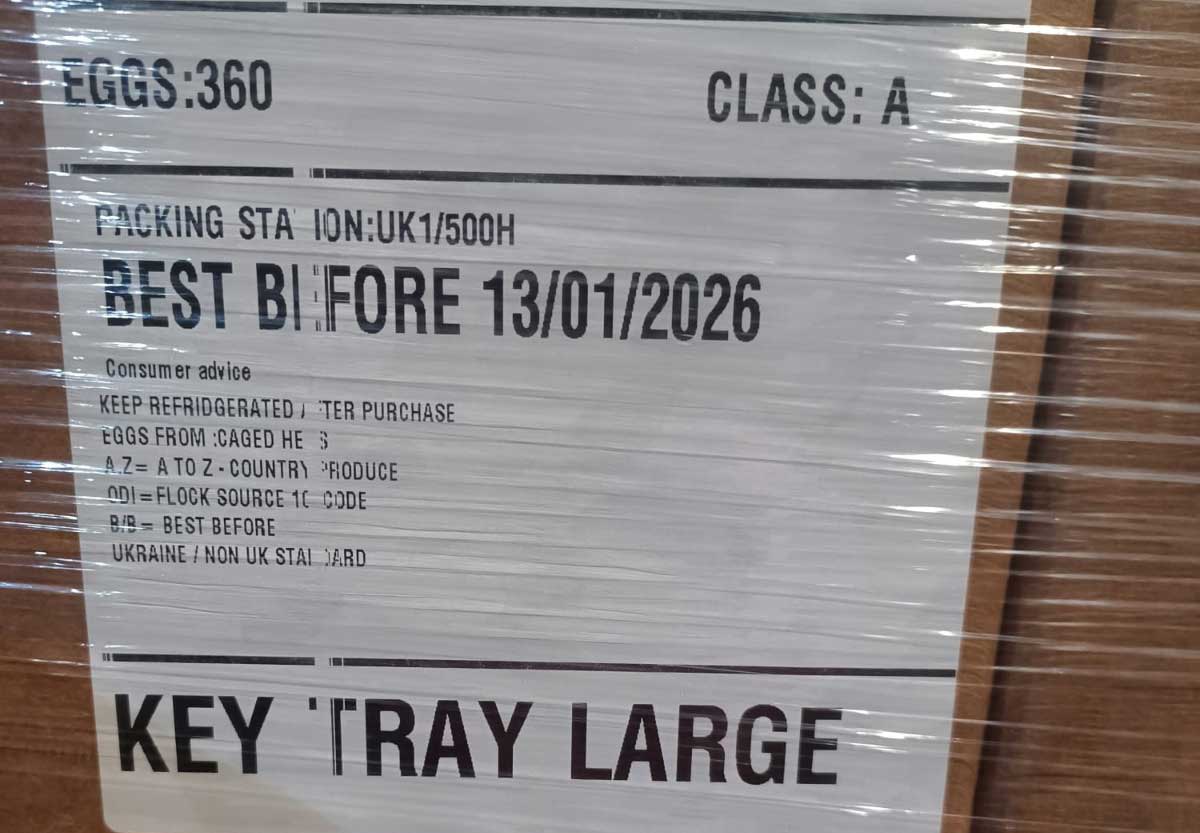
The UK Government’s decision to extend tariff free access for Ukrainian eggs and egg products for a further two years has intensified criticism from across the egg sector, with producers warning that the move exposes a fundamental contradiction between domestic welfare policy and international trade.While ministers continue to frame the extension as part of the UK’s ongoing support for Ukraine as it approaches the fourth anniversary of Russia’s illegal invasion, the egg industry argues that the cost of that support is being borne by British farmers who are already facing rising production costs driven by ever higher animal welfare, environmental and food safety requirements.The decision has also concerned many animal welfare organisations, which had urged the Government not to export higher welfare standards through UK regulation only to allow eggs produced to lower standards overseas to be imported tariff free and compete directly with British production. Welfare groups have repeatedly warned that such an approach risks undermining domestic farming while failing to deliver meaningful welfare improvements internationally.Gary Ford, Head of Policy and Producer Engagement at the British Free Range Egg Producers Association, said the extension of the agreement was extremely disappointing. He said BFREPA had hoped that, at the very least, the Government would introduce a quota system to provide some level of control over the volume of imports entering the UK.Gary Ford stressed that support for Ukraine must not come at the expense of British farmers. He said any assistance provided by the UK Government should be funded through general taxation and not through trade policy that disadvantages egg producers who have invested heavily in meeting world-leading standards of animal health and welfare, environmental protection and food safety.He added that the decision was unfair both to producers and consumers. British farmers have invested significantly in egg production to meet high standards, while a significant proportion of imported eggs are expected to enter the processed food sector as ingredients, meaning consumers will have no clear indication of country of origin and no ability to make an informed choice.BFREPA has also continued to raise concerns about equivalence of standards. Gary Ford said Ukrainian eggs are not produced to the same standards required of UK producers, noting that Ukrainian egg packaging itself carries the label “non-UK standard”. While BFREPA has been reassured that eggs exported to the UK will meet UK requirements as part of the trade deal, he said the continued use of such labelling raises serious concerns and doubts.Although safeguard mechanisms exist within the agreement, BFREPA does not believe they can be activated quickly enough to prevent harm to British egg farmers. Gary Ford warned that many producers are small family businesses which, through a combination of higher costs driven by high standards on farm and limited scale, cannot compete with very large Ukrainian businesses operating at lower standards of production. He also said intervention thresholds are set far too high, meaning financial damage could occur long before official data reflects the impact.Gary Ford said BFREPA would continue to work closely with the Government to ensure the concerns of its members are fully understood and to press for a fairer, more balanced approach to future trade arrangements. He added that the organisation will monitor the situation very closely and will not hesitate to call on Government for support and appropriate, timely intervention if a negative impact on members becomes evident. Following the announcement, the egg sector will now be seeking an urgent meeting with Government to discuss its concerns.The criticism has been echoed and intensified by the British Egg Industry Council, which has accused the Government of operating double standards that undermine both producers and consumers. The organisation says the tariff free extension will see millions more eggs from battery cage systems, banned in the UK for more than a decade, enter the market, largely through ingredient use.Industry frustration has been heightened further by the Government’s recent indication that it wants to ban the use of enriched cages in the UK, while continuing to allow eggs from those systems to be freely imported.Nick Allen, Chief Executive of the British Egg Industry Council, said the Government’s actions showed a disregard for the consequences of its policies. He said the approach was deeply flawed and raised serious questions about what outcomes the Government expects to achieve, particularly given food safety concerns that have already emerged elsewhere in Europe in relation to Ukrainian eggs.Nick Allen said that while the European Union has recognised the risks by reintroducing tariffs and controls, the UK has instead created an open door for eggs produced to standards far below those required of British producers and illegal to be produced in the UK. He warned this exposes consumers to unnecessary risk and unfairly undermines domestic producers who meet significantly higher welfare and safety standards, eroding trust in the standards the British public expects.James Baxter, chairman of BFREPA and a Scottish free range egg farmer, said the organisation had worked extremely hard to convey the strength of feeling among members to Defra and the Department for Business and Trade. James Baxter said producers see deep unfairness in the continued import of eggs from Ukraine and while they support the Ukrainian people, that support should come from general taxation.James Baxter said extending the existing trade deal was an easy option that not only undermines UK egg farmers but also contradicts the Government’s own recently published welfare strategy and its assurances that high animal welfare standards would be protected in future trade deals.He also raised concerns about the safeguards within the agreement, saying the threshold for triggering them is far too high and that the HMRC data on which decisions rely is both out of date and, at times, inaccurate.James Baxter said BFREPA, alongside the British Egg Industry Council, has written to the Prime Minister and both Government departments, met with MPs and shared photographic and anecdotal evidence showing that Ukrainian eggs are falling well short of the high standards UK producers operate to. He said it was therefore deeply disappointing, and unfair on members, that the decision had been taken.He concluded that the announcement not only badly lets down British egg farmers but also undermines the UK’s world-leading animal welfare and food safety standards, the nation’s food security at a challenging geopolitical time, and British consumers who value and support British produce.