

Standing out in the egg market: branding, innovation and consumer connection
Published on : 21 Apr 2026
 At the World Egg Organisation conference in Warsaw, Poland, four senior industry figures set out how egg businesses are adapting to shifting consumer expectations around protein, convenience and brand identity. Speaking under the theme Standing Out in the Egg Market: Branding, Innovation & Consumer Connection, each presenter brought a perspective shaped by their company’s scale, structure and market focus.Across the sessions, the emphasis moved well beyond shell egg production. The focus was on how eggs are being repositioned through value added products, clearer branding and entry into new consumption categories, particularly those driven by convenience and high protein demand.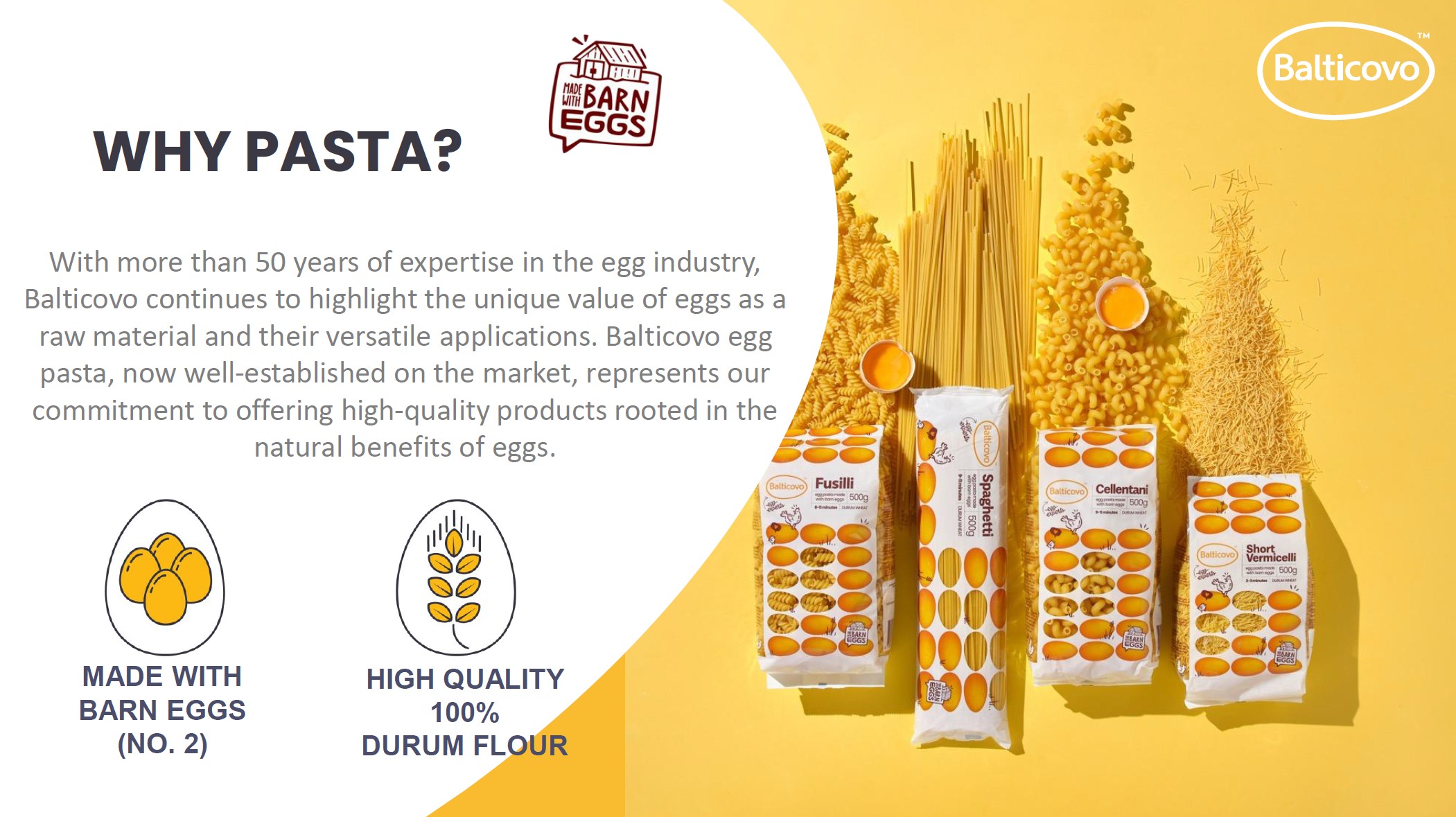
Balticovo: Why pasta?
Toms Auškaps, Head of Communications and Strategic Development, Balticovo
Toms Auškaps, Head of Communications and Strategic Development at Balticovo, delivered a product led presentation focused on how eggs can be extended into entirely new categories. Representing one of Northern Europe’s largest producers, he outlined a fully integrated business producing more than one billion eggs annually, with control across feed production, farming, processing and distribution.His focus was on using eggs as a functional ingredient rather than a standalone product. Balticovo has previously explored this through concepts such as egg protein ice cream, but its most developed and commercially advanced innovation is egg based pasta.The pasta range has been designed to mirror traditional formats such as spaghetti, fusilli, rigatoni and gnocchi, while incorporating eggs to increase protein content and enhance texture. Produced using barn eggs and 100 percent durum wheat, the product uses the natural binding, emulsifying and enriching properties of eggs to deliver improved structure, colour and mouthfeel alongside higher nutritional value.Auškaps explained that the strategy is to enter established categories with strong consumption habits, rather than attempting to change consumer behaviour. By placing eggs into a format already widely consumed across all age groups, Balticovo has been able to accelerate adoption. The result has been rapid uptake, with the product reaching around 5 percent market share in Latvia within its first 18 months.Packaging has been central to this success. The design clearly links eggs to the final product, using bold visuals and a strong narrative from raw ingredient to finished food. This has not only improved shelf standout but also driven significant engagement on social media, where preparation instructions and product format have attracted attention and discussion.The target audience is clearly defined. Younger consumers, sports focused lifestyles and active households are key focus areas, with pasta already a staple within these groups. By integrating eggs into this format, Balticovo aligns with existing consumption patterns while reinforcing eggs as a high quality protein source.Auškaps positioned these products as both commercial lines and marketing tools, helping to promote the wider egg category and remind consumers of its versatility. Alongside this, the company continues to invest in circular economy systems, including large scale biogas production from poultry manure, and is progressing towards cage free production.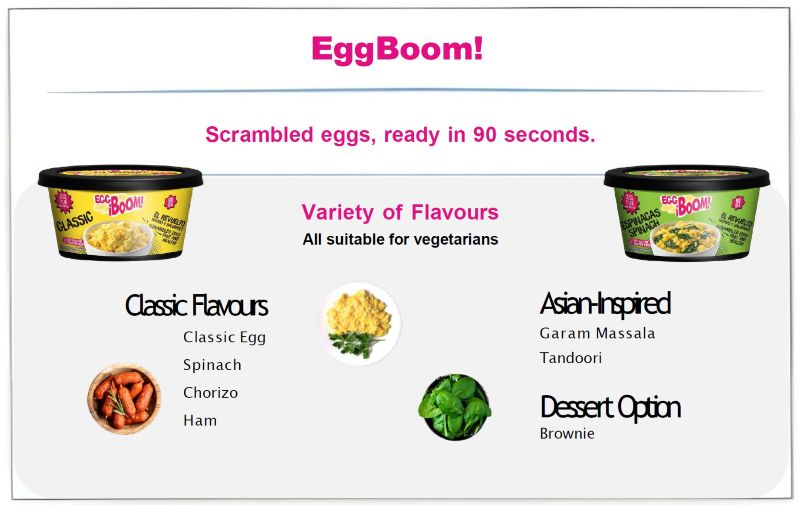
Álvarez Camacho, Spain: Scrambled eggs ready in 90 seconds
Jordi Mas, Managing Director, Álvarez Camacho
Jordi Mas, Managing Director of Álvarez Camacho, presented a strategic view of eggs within the wider protein market. His focus was on the imbalance between egg and milk protein in high protein products, highlighting that while milk dominates the category, eggs remain significantly underrepresented.Mas outlined the nutritional advantages of eggs, including their high biological value and greater protein yield per kilogram compared to milk. He also pointed to consumer perception, where eggs are seen as less processed and more natural, offering a potential advantage over dairy based protein products.The key issue identified was the lack of egg based products in convenience driven segments. While high protein messaging is widespread across retail, it is rarely associated with eggs in ready to eat or instant formats.To address this, Álvarez Camacho has developed EggBoom, a dehydrated egg product designed for rapid preparation. The format allows consumers to prepare scrambled eggs in around 90 seconds by adding water and heating in a microwave.EggBoom is positioned directly against instant meal products, particularly pasta based formats widely consumed by younger demographics. It offers a protein rich alternative without additives, and is available in a range of flavours including classic, vegetable based and internationally inspired options.Mas described this type of innovation as a way to expand egg consumption into new occasions, rather than competing within traditional formats, with the potential to reposition eggs within the broader protein category.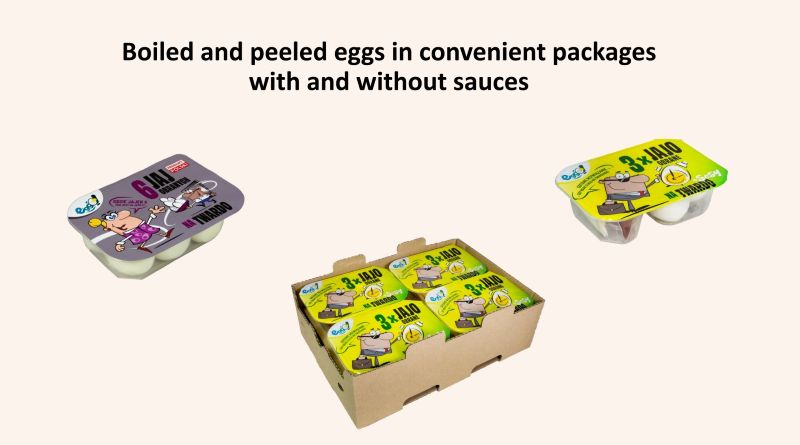
Older Group : Boiled, fried and peeled eggs in convenient packages with and without sauces
Edyta Janeczek, General Director, Oldar Group
Edyta Janeczek, General Director of Oldar Group, presented a processor led view of how eggs can be repositioned through convenience, functionality and targeted product development. Representing a Polish business with more than 30 years in egg packing and processing, she outlined how Oldar is moving beyond traditional supply into higher value, ready to eat and functional categories.Operating across packing, liquid egg production and foodservice supply, Oldar has increasingly focused its investment on processing capability. Janeczek described two strands of innovation within the business: continuous improvement of existing products and more strategic development aimed at entering new consumption segments.Convenience is central to this approach. Faster paced lifestyles are driving demand for protein products that require little or no preparation. Oldar has responded with a range of ready to eat formats, including boiled and peeled eggs presented in portable packaging, offered both as standalone products and with added sauces to broaden appeal.The company has also developed ready to eat fried egg formats, supported by dedicated egg cooking facilities. These allow Oldar to control consistency, food safety and shelf life, enabling eggs to compete directly with other prepared protein products.Alongside this, Janeczek highlighted the development of functional eggs. Selenium enriched eggs are positioned as a natural alternative to dietary supplements, aligning with increasing consumer interest in nutrition and health.Further differentiation comes from breed selection. Oldar works with the Polish green legged partridge hen, which produces eggs with lower cholesterol levels and higher concentrations of beneficial nutrients. This supports a premium positioning within the market.Janeczek also referenced earlier technical developments, including UV-C egg disinfection systems and pasteurised liquid egg production, which underpin the company’s move into more advanced processing categories.The approach combines processing expertise with targeted product development, allowing Oldar to respond to both convenience driven consumption and the growing interest in functional foods.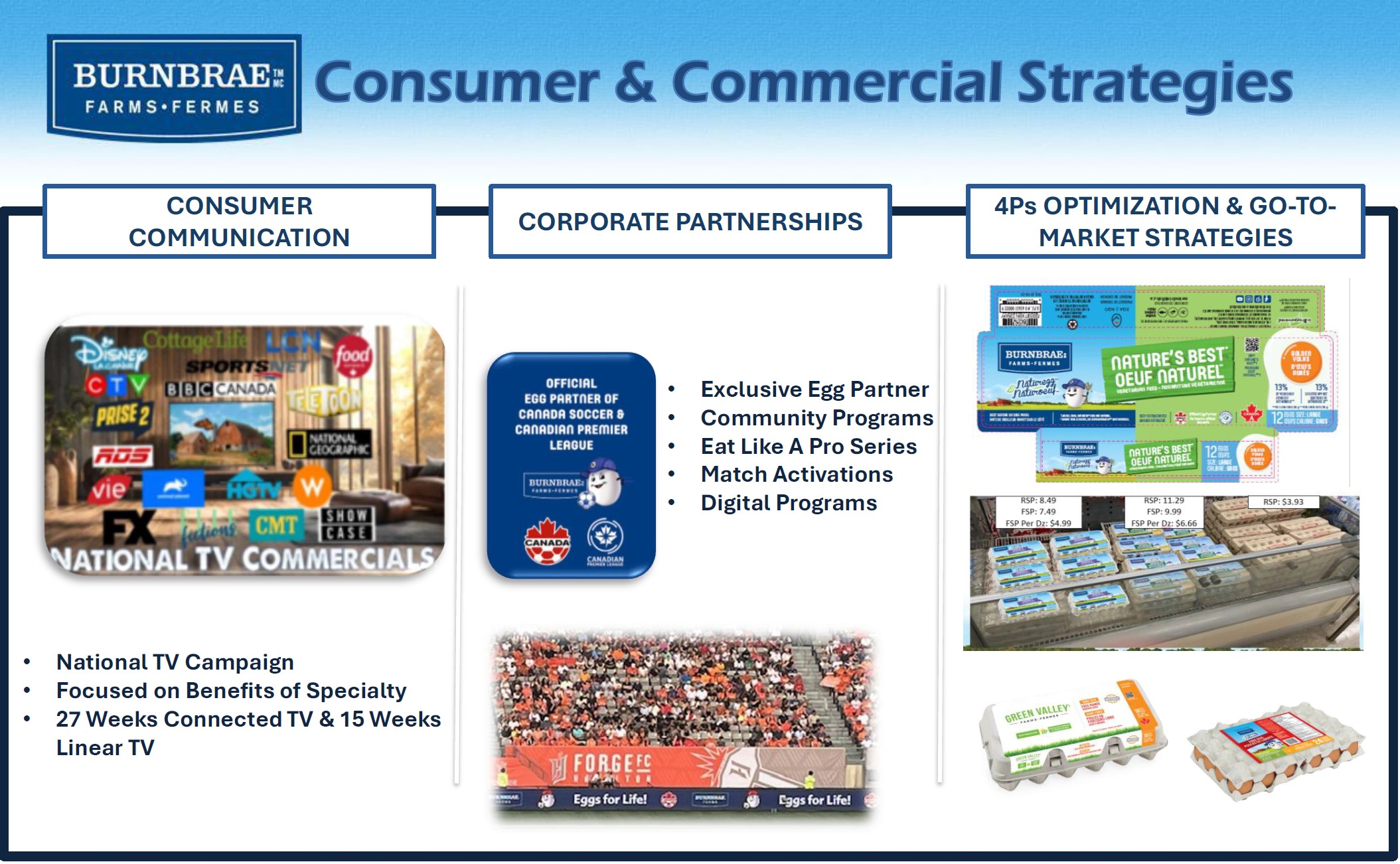
Burnbrae Farms, Canada: 300+ eggs per year per capita consumption: Current: 262
Margaret Hudson, President and CEO, Burnbrae Farms
Margaret Hudson, President and CEO of Burnbrae Farms, presented a Canadian business that has built its position through sustained investment in value added egg products and brand development. As a fourth generation family leader, she outlined how Burnbrae has evolved from its origins as a dairy farm into a national operation working with more than 400 farming families and supplying retail, foodservice and industrial markets across Canada.Her presentation centred on how product innovation has driven both growth and margin. Burnbrae was an early adopter of omega 3 enriched eggs, a category that has since become a key differentiator in retail. This was followed by expansion into liquid egg whites, which continue to gain traction among health focused consumers seeking high protein, low fat options positioned as clean, natural protein.Further development has focused on convenience. Hard boiled eggs and ready to eat formats are increasingly important across both retail and foodservice, offering consumers quick, nutritionally dense options while giving operators labour saving solutions. In foodservice, Burnbrae works closely with chefs and customers to integrate eggs into menu development, reinforcing their versatility across multiple meal occasions.Hudson also highlighted the role of packaging in driving sales. Simplified formats with strong colour blocking and clear claims help consumers quickly navigate a growing range of specialty products, improving on shelf performance.Brand activity extends well beyond retail. Burnbrae’s partnership with Canada Soccer is designed to link eggs with performance nutrition, particularly in the lead up to the 2026 World Cup. This includes stadium activations, digital engagement and grassroots programmes aimed at younger audiences.Sustainability runs throughout the business and is actively communicated as part of the brand. Environmental responsibility, animal care and community engagement are positioned as core values, helping to build long term consumer trust.