

New environmental guidance for poultry farms
Published on : 20 May 2026
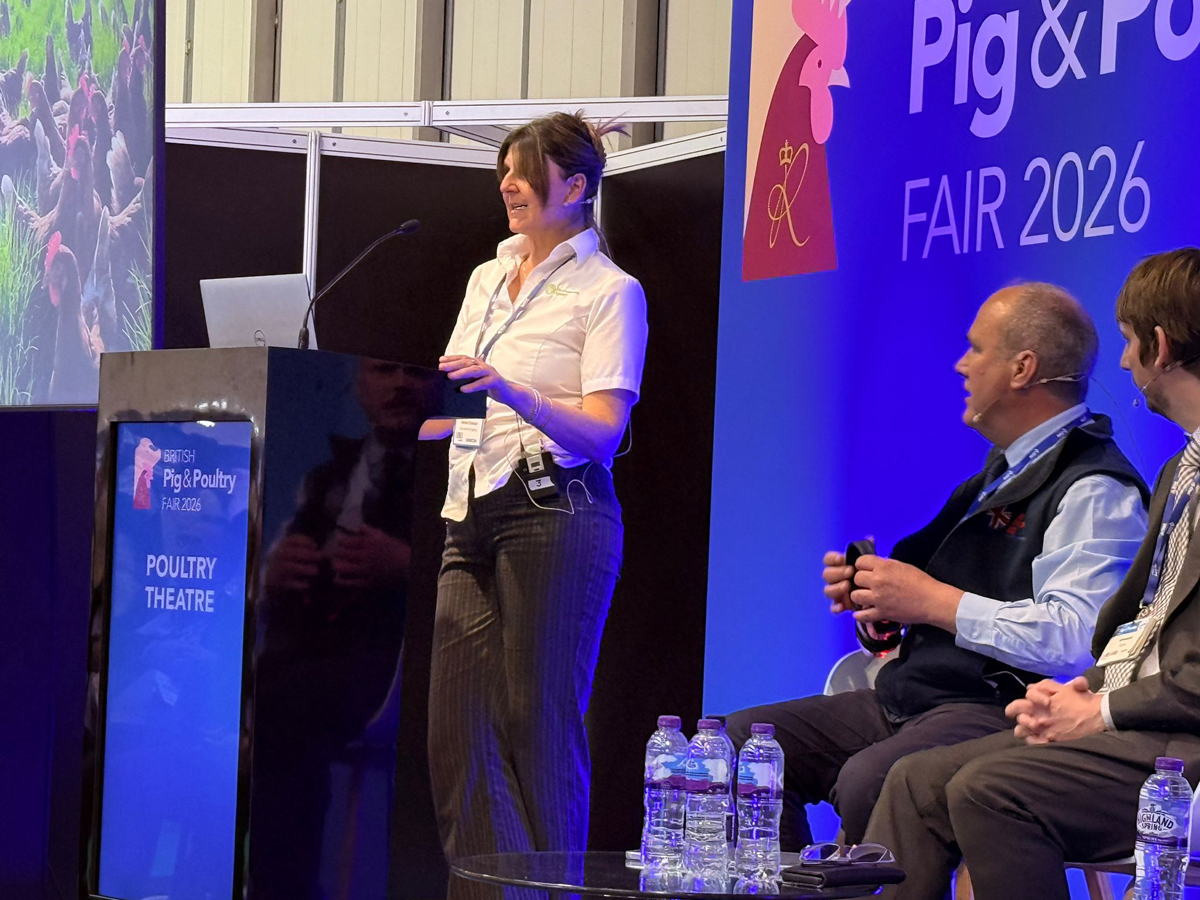
Environment Agency Agri-Food Industry Advisor Sharon Chisholm explained that the guidance remains under development but is expected to be completed within the next few months...
The Environment Agency has outlined plans for a new industry led poultry environmental guidance document aimed at helping free range egg producers better understand environmental regulations while also improving nutrient management and resource efficiency on farm.Details of the project were presented during the BFREPA forum session at the British Pig & Poultry Fair 2026, where Environment Agency Agri-Food Industry Advisor Sharon Chisholm explained that the guidance remains under development but is expected to be completed within the next few months.The document is being developed by the industry in conjunction with the Environment Agency and Natural Resources Wales.Introducing the session, BFREPA chairman Gary Ford explained why the association had been engaged with the project over the last 12 months and why the industry had pushed for clearer, more practical guidance for producers.“The environment is close to our heart,” he told delegates.“We’ve got a lot of external stakeholders looking at the industry, being pretty critical in some cases about what we’re doing to protect the environment.“That was the driver, but also I was very keen that we had almost a ‘one stop shop’ of where producers could go to, A, find out the relevant environmental protection legislation that pertain to their poultry farm, but B, also look at what is good practice.”Mr Ford said many poultry businesses currently struggle to navigate environmental legislation spread across multiple websites and organisations while managing day-to-day farm operations.“All these pieces of legislation are available on different websites, and it can be difficult for producers who are busy doing a day job to navigate,” he said.“Working collaboratively with the EA and NRW we’ve tried to bring it all together under one piece of work, under one guidance document. We thought that would be a useful reference document for producers to understand the legislation and also what good practice looks like.”He added that a small working group had been meeting regularly while the guidance was being developed and said producers would still have opportunities to provide feedback before the final document is published.The main presentation was delivered by Sharon Chisholm, who has worked for the Environment Agency for 28 years and now holds a national role focused on engaging with the poultry supply chain production in England.Ms Chisholm described the document as a practical guide designed to combine environmental compliance information with workable on-farm management advice.“This is very much about good practice as well as the regulatory requirements,” she said.“You will see within it, we have set out regulatory requirements, but we’ve also set out suggested good practice factors that you might need to think about.“It’s very much highlighting how you can make the most of resources on your farm.“Anything lost to the environment is essentially a resource that’s lost from your business.”The guidance is expected to cover a wide range of subjects including housing, facilities and equipment, drainage, range management, clean-out procedures, manure handling and storage, manure exports, nutrient management, emergency planning, disease outbreak procedures, pollution prevention regulations and new poultry developments.A strong focus throughout the presentation was ammonia management and nutrient retention, with Ms Chisholm repeatedly linking environmental protection to improving business efficiency.She explained that reducing ammonia emissions was not only important environmentally, but also helped producers retain valuable nitrogen within the farming system at a time when fertiliser costs remain historically high.“When we think at the moment about the price of nitrogen to purchase at around about £520 a tonne, obviously keeping hold of as much of that nitrogen as you can will help your business efficiency,” she said.“That applies whether you use that manure on your own farm or whether you provide it to another farmer.”Much of the discussion centred around practical manure handling and storage measures that could help reduce pollution risks while improving nutrient retention.Ms Chisholm explained that producers would be encouraged to assess how manure is transferred from sheds into trailers or storage areas and consider whether improvements to drainage, handling systems or covered loading areas could reduce losses and contamination risks.She stressed throughout the session that the guidance was intended to support producers rather than impose rigid systems on farms.“It’s not prescriptive,” she said.“It’s just suggesting things that you might want to think about to prevent pollution on your site, and what works for you might not work for somebody else.”The importance of manure storage was another major theme during the session, particularly the benefits of covered storage systems in retaining nutrients and reducing ammonia emissions.Ms Chisholm explained that keeping manure dry not only improves handling and reduces flies and odour, but also helps preserve valuable nutrients such as nitrogen, phosphate and potassium.Advice within the guidance will also cover temporary field heaps where permanent manure stores are unavailable, alongside reminders about the different regulatory requirements that apply in England and Wales, including nitrate vulnerable zone rules.The Environment Agency presentation also highlighted how the project has evolved during development, with additional sections now being added following recent disease challenges across the poultry sector.One of those additions is a dedicated disease outbreak procedures section being developed alongside APHA following the avian influenza outbreaks that have affected poultry farms over recent years.“We’re very aware that it’s been a very challenging year and many producers have been in the difficult position of having to dispose of infected material,” Ms Chisholm said.“This section is being produced in consultation with APHA.”The guidance is also expected to include practical case studies over time to help demonstrate how environmental improvements can work in commercial poultry systems.One example discussed during the session involved a producer moving from uncovered field heap storage to a covered manure store. Ms Chisholm said the change significantly increased dry matter content while reducing nutrient losses.“The nitrogen, the phosphate, the magnesium, the sulphur and the potassium all increased by around 50% with a covered store,” she explained.“And retaining and protecting that is a win-win for the environment and the business, helping future resilience.”Questions from producers later turned to whether government grant funding might eventually become available for poultry manure storage infrastructure.Ms Chisholm acknowledged that no such funding was currently available, although Gary Ford said BFREPA had repeatedly raised the issue with DEFRA.“What we really, really need is some grant funding and a planning system that is fit for purpose that will allow us to put up manure stores,” he said.“That arguably is the single most important thing that we can do in terms of being custodians of the environment.”Another producer asked how the success of the guidance project would ultimately be measured.Ms Chisholm said the Environment Agency hoped the guidance would improve producers’ understanding of environmental risks and encourage better management decisions across the poultry sector.“I think we’d like to see an improvement in understanding the risks to the environment, how this guidance has helped people assess those risks and address them and move forward,” she said.“It is very much an educational document and a collaborative document.”She also highlighted the importance of peer-to-peer learning and said future versions of the guidance could incorporate more producer examples to demonstrate practical environmental improvements on farm.The guidance is currently being developed for England and Wales, reflecting the involvement of both the Environment Agency and Natural Resources Wales. During the session, BFREPA indicated there are hopes the approach could later be expanded further across the UK.BFREPA are expecting the guidance to be finalised and published later in the summer.SEO keywords: Environment Agency poultry guidance, poultry environmental guidance, free range egg producers, poultry manure storage, Sharon Chisholm, BFREPA, poultry environmental regulations, poultry nutrient management, manure handling guidance, poultry ammonia emissions