

Middle East Uncertainty Raises Feed Price Questions for Egg Producers
Published on : 11 Mar 2026
 Farm gate free range egg prices had stabilised at stronger levels over the past two years, while feed costs appeared to be gradually softening before the recent escalation of conflict in the Middle East raised fresh uncertainty for feed markets, according to the latest quarterly survey from the British Free Range Egg Producers Association (BFREPA). Spot market prices for key feed ingredients such as soya and wheat have also begun to edge upwards again in recent weeks, reflecting growing volatility in global commodity markets.The survey provides a snapshot of what producers are currently being paid for their eggs and what they are paying for feed. The figures referenced here are from the previous BFREPA survey conducted in November 2025, with the latest results from the current survey due to be published at the end of March. The results highlight how the market had gradually settled following the volatility seen in previous years.ADAS produces the most comprehensive breakdown of egg production costs each month for The Ranger magazine, which nearly half of all producers follow in full or in part. The analysis helps provide a clearer picture of how egg prices and feed costs are affecting margins across the free range sector.The data shows a clear shift in egg prices between 2024 and late 2025, with producers gradually moving into higher price brackets. In April 2024 a small proportion of producers were still receiving less than 130 pence per dozen, while many were spread across lower and mid range price bands. At that stage only around 14 percent of respondents reported prices between 156 and 160 pence.By September 2024 the lowest bracket had effectively disappeared from the survey responses, and the 156 to 160 pence range had become the most commonly reported price band. Through 2025 the market appeared to settle into this range. Surveys carried out in March and July showed the majority of producers clustered between 156 and 160 pence per dozen, with relatively small numbers reporting prices above 166 pence.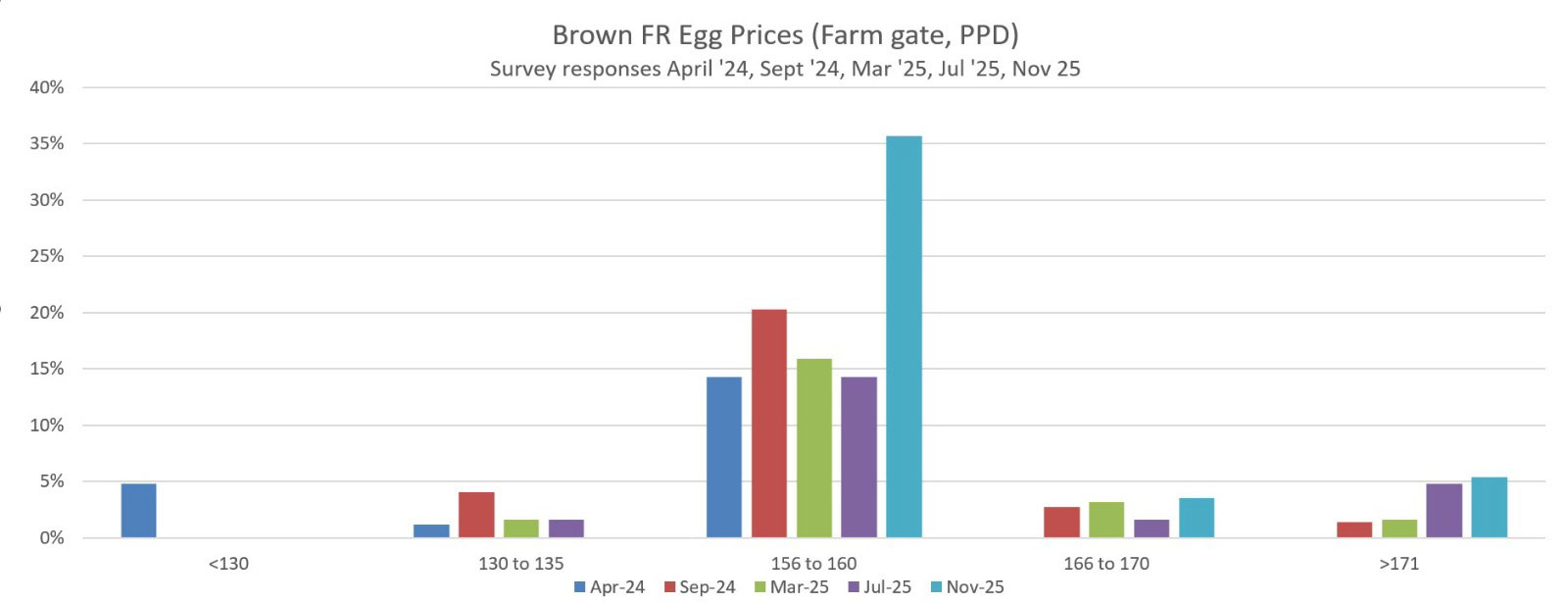
Brown Free Range Egg Prices (Farm Gate, PPD - Survey responses Apr '24 - Nov '25)
The most recent results from November 2025 show the clearest consolidation, with more than a third of respondents now reporting prices within the 156 to 160 pence bracket. A small but growing number of producers are also achieving prices above 166 pence. Overall, the results suggest the market has stabilised around the mid to high 150s, while the very lowest price levels that some producers experienced in early 2024 have largely disappeared.Feed prices, however, have followed a slightly different pattern. While costs have remained spread across several price bands, there are signs that prices have softened slightly toward the end of the survey period.In September 2024 the distribution was relatively even across the mid range price brackets. Around 15 percent of producers reported paying between £306 and £315 per tonne, with similar proportions in the £275 to £285 and £296 to £305 ranges.
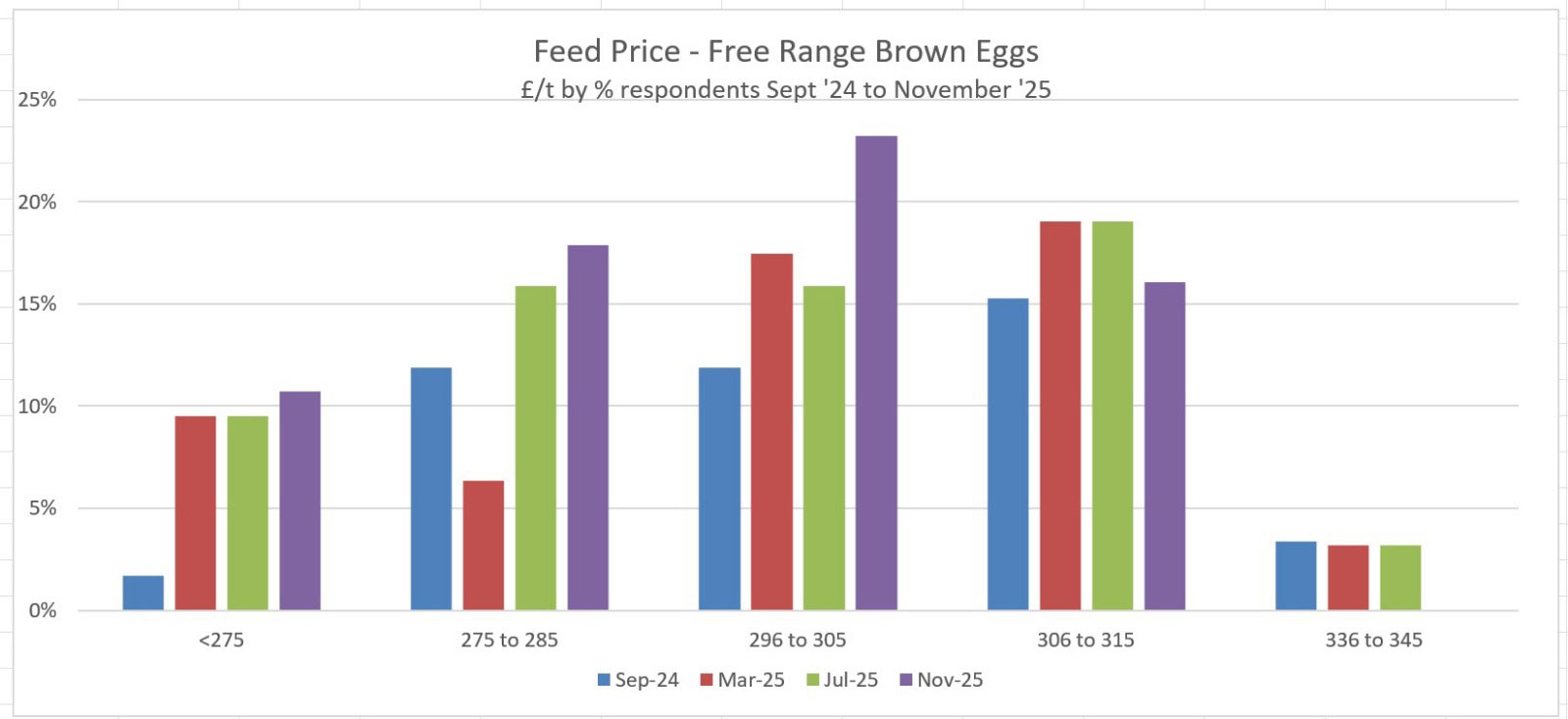
Free Range Brown Egg Feed Prices (Survey responses Sep '24 - Nov '25)
By March 2025 more producers began reporting feed prices below £275 per tonne, although the £296 to £305 and £306 to £315 brackets remained the most commonly reported ranges. During July 2025 most prices still fell between £275 and £315 per tonne, with the £306 to £315 band slightly more prominent.However, by November 2025 the most commonly reported feed price had shifted to the £296 to £305 bracket. At the same time, more producers reported prices between £275 and £285, suggesting a modest easing in costs. Overall, feed prices across the survey period have remained largely concentrated between £275 and £315 per tonne, although the latest results suggest some downward movement in the higher price bands.
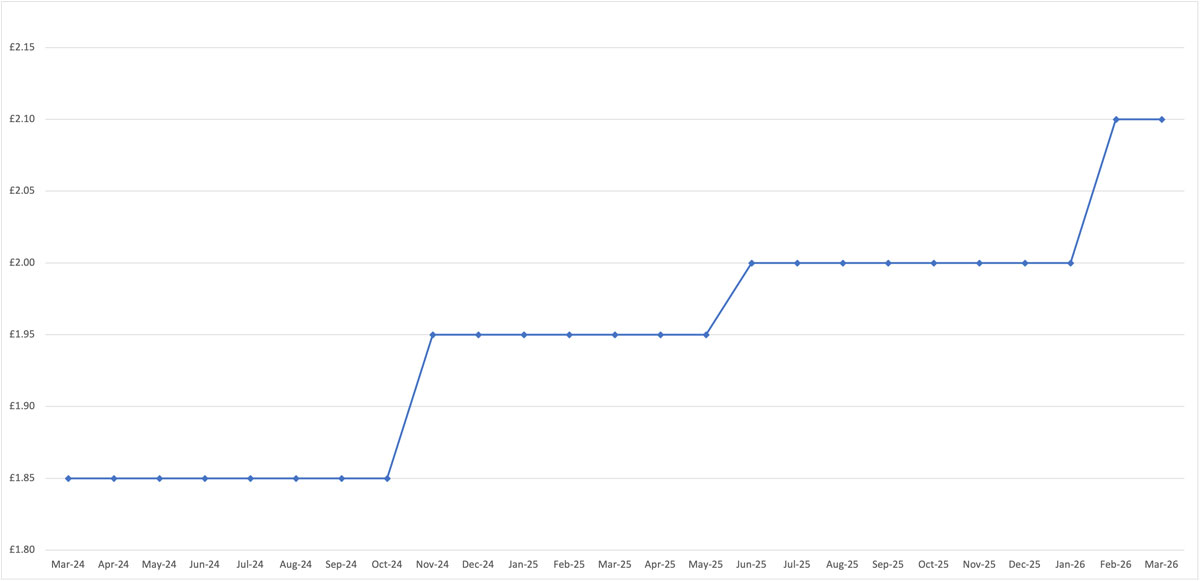
Price of 6 x Tesco Large Free Range Eggs - Mar '24 - Mar'26
Spot commodity markets help explain some of this movement. Wheat prices have generally traded in the region of £180 to £220 per tonne during the period, while soya has typically moved between around £340 and £420 per tonne depending on global supply, currency movements and energy markets. These raw ingredient costs remain a key driver of compound feed prices for egg producers.Recent escalation of conflict in the Middle East may yet impact global grain and energy markets, which in turn could influence feed prices for egg producers in the coming months.The survey demonstrates how collective data from producers can provide valuable insight into the real economics of free range egg production. By tracking both egg prices and feed costs over time, the data helps highlight shifts in margins and market conditions across the sector.For consumers, retail egg prices have also shown a gradual upward movement over the past year. Data tracking the price of a six pack of Tesco large free range eggs shows that prices remained stable at around £1.85 for much of early 2024 before rising to £1.95 towards the end of the year. Through most of 2025 the price settled at around £2.00, reflecting wider food price trends and continued pressure from feed, energy and production costs across the supply chain.In early 2026 the retail price rose again to around £2.10 per pack, marking the highest point in the period. While the increases have been gradual, the overall trend highlights how changes in farm level costs and market conditions can ultimately filter through to shoppers over time. Despite these adjustments, eggs remain one of the most affordable and versatile sources of high quality protein available to consumers.