

How Government is valuing laying hen welfare in policy appraisal
Published on : 18 Feb 2026
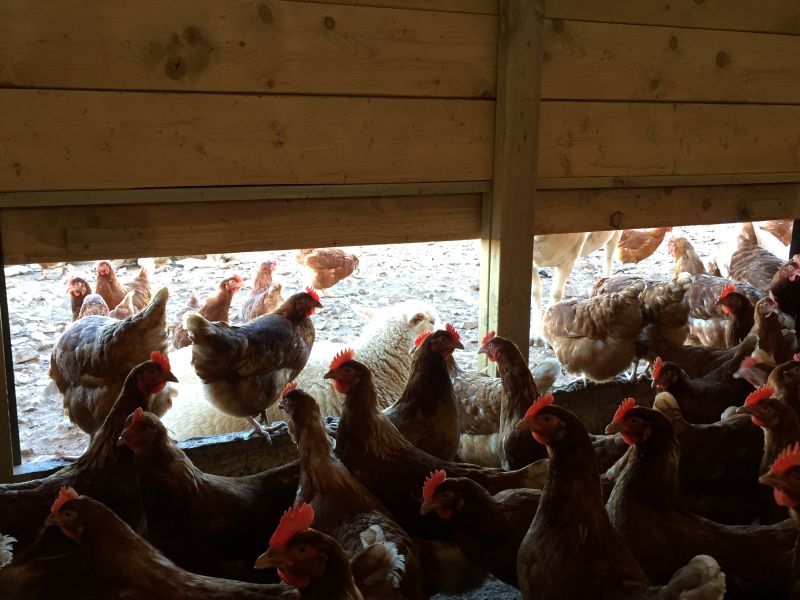 A Defra funded study, commissioned in 2023 at a cost of £331,000 and published in January 2025, has set out a formal method for scoring laying hen welfare and attaching economic value to system changes. The framework is now being used within government policy appraisal, allowing welfare gains to be compared against regulatory costs under Treasury rules. The subsequent consultation on ending cages suggests the work is already feeding into live policy discussions.The scoring model uses a 0 to 100 scale. Zero represents extreme suffering. One hundred represents an idealised welfare state rather than any existing commercial system. The assessment is lifetime based, covering rearing, the laying period and end of lay.For laying hens, the study assigns the following welfare scores (out of 100):Colony cage production: 32.2Barn production: 43.8Free range production: 51.3UK average across systems: 50.0The 19.1 point increase between colony cages and free range is significant under this methodology. It reflects differences in behavioural opportunity and housing structure rather than incremental management adjustments.It is worth noting that the report models the uplift achieved by removing colony housing and moving birds into systems equivalent to average UK free range production. It does not assess how to improve free range further, nor does it suggest that free range should reach a specific higher score.That distinction is relevant given the structure of the current UK flock. Free range now accounts for roughly 32 million of the national 42 million laying hens. Colony numbers, estimated at around 8.5 million at the time of analysis, continue to decline as retailers phase out cage shell egg supply. Much of the structural transition has therefore already occurred through market change rather than regulation.The free range score of 51.3 sits close to the midpoint of the scale. That position reflects the strictness of the model. The scoring system gives weight to health outcomes, fracture prevalence, injurious pecking, indoor stocking density, flock size and whole life management. It does not allow strong performance in one area to offset weaker outcomes elsewhere.The report does not set targets for free range systems. However, the scoring framework indicates that further gains would depend on measurable improvements in health indicators, fracture reduction, injurious pecking control and effective range utilisation.Alongside expert scoring, the study uses a consumer survey to estimate economic value. Households were asked to choose between welfare score improvements and increases in their annual food bill.For laying hens, respondents indicated an average willingness to pay of £4.44 per year for each one point increase in welfare score from the current baseline of 50.Increase in laying hen welfare score: Household willingness to pay (£ per year)+1 point: 4.44+5 points: 21.40+10 points: 40.80+20 points: 58.21+30 points: 98.43Applied to system change, the model estimates that moving fully from colony cages to free range equates to £84 per household per year, or approximately £496 million in total UK benefit. These figures are used in policy appraisal and do not represent retail price outcomes. The free range score of 51.3 may raise eyebrows within the sector, particularly given the scale of investment in higher welfare systems over the past two decades. However, the position reflects the strict, lifetime based methodology rather than a comparative judgement against historical systems.For producers, however, the question does not stop at the valuation of welfare gain. System reform carries capital cost, operating cost and implications for stocking density, labour and bird performance. One practical example is external stocking density. EU rules permit up to 2,500 birds per hectare on the range, while the Lion Code limits density to 2,000 birds per hectare. Aligning with the higher EU threshold could reduce cost per egg and improve competitiveness, but under this scoring framework it would also reduce the welfare score attributed to the system. That reduction would carry a negative economic valuation within the model, because willingness to pay is attached to welfare improvement rather than cost saving.In practice, the balancing of those competing effects does not happen within the welfare score itself. The scoring framework measures welfare change. Treasury cost benefit analysis then weighs that change against production cost, regulatory burden and wider economic impact. How those competing considerations are prioritised will ultimately shape the direction of policy.Welfare reform is often discussed publicly in the context of campaigning and retail policy decisions. This study demonstrates the more formal route through which change is assessed at government level. Commissioned from academic researchers and developed for use in Treasury cost benefit analysis, it provides the evidence base required for regulatory consideration.As debate around housing systems continues, understanding how welfare gains are quantified — and how those valuations are constructed — will be increasingly important for producers.Click here to read the full report.