

Heat - what’s all the stress about?
Published on : 22 May 2026
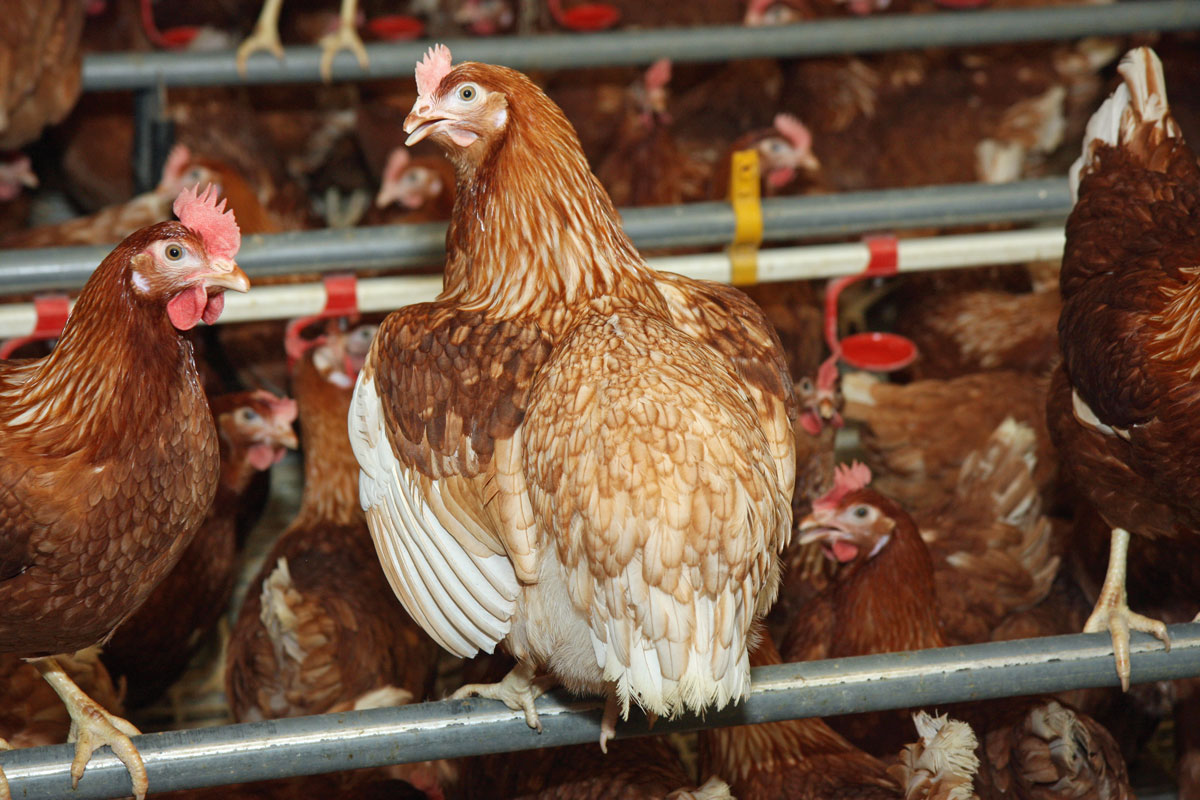
Wings held away from the body is a sign of mild heat stress
The weather of a British summer, true to regular form, is as unpredictable as ever. However, the most apparent trends seem to be developing into extremes of temperature instead of consistent seasonal expectations. It is more important than ever that producers are aware of the early indicators of temperature related stress in their flock, and also what can be done to minimise the stress in the first instance but also how to manage the knock-on effects. We have all heard of heat stress, and some of us have the unfortunate first-hand experience of it, but why is it becoming more of a regular concern? Well apart from the extremities in normal weather conditions as mentioned above, we now have the changes in systems and housing to contend with. With more birds moving into barn or aviary systems we have less control over their distribution within a building. We certainly can’t rely on the birds moving themselves into cooler or better ventilated areas to avoid heat stress. Hotting UpChickens, as with all warm-blooded animals, produce heat through metabolic processes. The metabolism of a bird is considerably higher than that of mammals as birds have evolved a metabolism that works at a much higher rate to produce energy for the demands of flight. The internal temperature of a mammal is around 37C where a chicken records a temperature of around 41C. The first hurdle in controlling heat stress is that the flock produce so much heat themselves. Simple physical characteristics such as feather cover, wattle and comb size, or stature can influence how well the individual bird can dissipate heat away from her body, or transversely retain it in cold situations. While there are very slim differences in the commercial layer strains used in the UK market, regularly performing feather scores and reviewing wattle and comb size can help identify at-risk flocks early. The other important physical characteristic of the hen is the fact she cannot sweat. The majority of heat exchange in chickens occurs via convection from the comb and wattle and evaporation from panting. Heat loss through panting is most efficient in dry conditions, if a building becomes very humid as well as hot the bird will struggle to cool herself through panting alone. The flock can also lose heat via the surrounding air; either convection via the natural rise of heat or conduction if positioned next to a cool surface. On very still, hot days birds are less likely to seek a cool surface on which to conduct heat away from themselves but are more likely to stand still and pant whilst holding their wings away from the body, aiming to evaporate or convect as much heat away from their bodies as possible. Sources of external heat for the free range or barn housed flock can come from various sources. The most obvious are heat radiation from poorly insulated or metal rooves that allow heat to transfer to the internal environment. Appropriate insulation and roofing materials are the best control methods. Other heat sources include direct sunlight, a difficult one to manage through pop holes. The sun can often be a friend for the free ranger; killing off parasites, drying up pop holes and encouraging the range to grow back. However, too much direct sunlight can be equally as impactful, for instance over stimulated birds, prompting aggressive pecking and, in the case of this article, introducing excess heat to a building. Reading the SignsMild Heat Stress• Increased water consumption • A reluctance to move • Wings held away from the body • Panting or open mouth breathing Moderate Heat Stress• Very heavy panting • A drop in food consumption • A drop in egg production • Inactivity • Muscle twitching Severe Heat Stress• Recumbency • Advanced lethargy • Death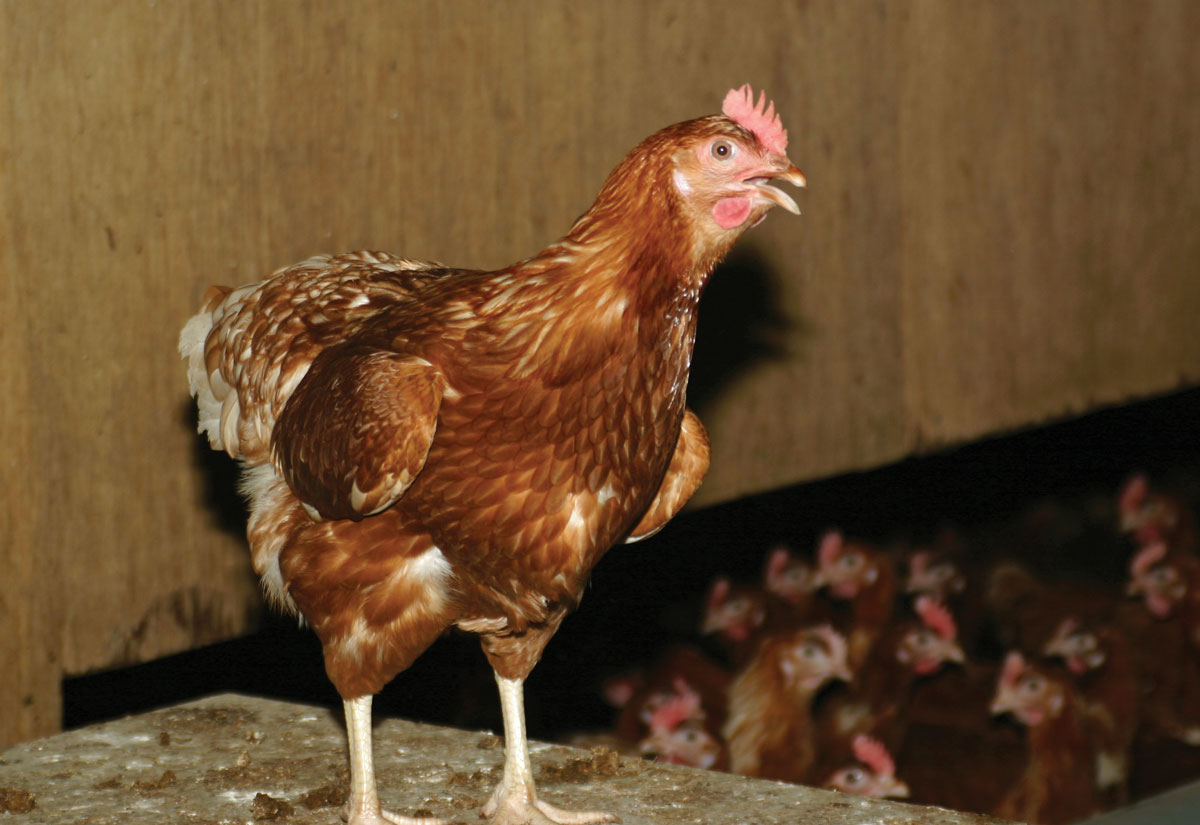
Moderate heat stress signs can involve very heavy panting
The Chemistry BitAs we’ve already identified, when birds get too hot, for whatever reason, their method of cooling down is to pant. This rapid motion of moving air back and forth across the oral cavity using the flutter of the tongue encourages heat to leave the body via evaporation. But what else leaves the body? This rapid breathing motion also results in excess carbon dioxide leaving the body due to the rapid but shallow respiratory cycle. The result is a decreased level of carbon dioxide in the blood stream causing what we refer to as a respiratory alkalosis. By losing excessive amounts of carbon dioxide through panting the bird’s blood stream increases in pH and becomes more alkaline. The bird’s physiological response to this is to try and restore the balance – to restore homeostasis. It does this, mainly, by drawing back bicarbonate reserves from the shell gland. While the bicarbonate helps to restore the blood pH, it reduces the bicarbonate available for egg shell formation with the result often being weaker egg shells. While I would like to leave the chemistry there, as I never have been a fan of chemistry, unfortunately the potential biochemical imbalances can continue. The control of ions in the body is not completely regulated by respiration but also the kidneys and various other buffer systems. However, the respiratory cycle alone can have quite an impact on ion balances. If the bird has reduced bicarbonate levels, she has lost some of the buffer capacity for hydrogen ions. Hydrogen ions can create an acidic effect if not buffered by bicarbonate, hence a lack of bicarbonate can allow a metabolic acidosis to form. Acidosis can lead to increased urinary calcium excretion as it outcompetes calcium in the kidneys, this can stimulate the body to signal an increased release of calcium from the bone reserves. So not only do we have the risk of an osteoporosis forming but the initial decrease in available calcium brings us back to weak egg shells!Maintaining the Balance A heat stress can not only cause an electrolyte imbalance, it can cause a straight forward dehydration. We all know that hens who aren’t drinking almost certainly won’t be drinking. Manmade dehydrations through equipment failure or water deprivation prior to vaccination are relatively easy to rule out. Dehydration secondary to heat stress tend to be a little more subtle. A heat stress event can cause the feed to water ratio to increase from around 1:1.9 up to as much as 1:3.5 meaning the birds are consuming excesses of water to compensate for heat stress or water deprivation. Watch out for the wet litter coming through in a few hours’ time! It has been show that 48 hours of a heat stress or water deprivation can result in the flock taking up to 12 days to return to peak lay, with a potential drop down to less 10% in the process. Electrolyte therapy is one tool which can be utilised alongside good ventilation and good stockmanship. The intention of electrolyte therapy administered through the drinking water is primarily to encourage the flock to drink but also to maintain or restore any losses of the normal body salts. Sodium and potassium regulate water balances and osmosis within the body and are vital to maintaining a homeostatic state in which the flock have the best chance of minimising stress through a heat wave and maintaining good egg production. Be aware that electrolyte therapies should only offer around half of the normal daily intake of sodium and potassium, excessive amounts can have their own repercussions. Planning & Policy Pre-empting heat stress is a combination of good stockmanship, being able to read your birds, and having an accurate as possible weather forecast. The latter is often harder to come by than the former. The guidance on environmental temperatures are relatively relaxed. The BEIC Lion Code suggests a target temperature for internal environments should be 21C, but acknowledges this is hard to maintain, especially in free range houses. The code relies on good stockmanship to maintain a ‘thermally comfortable environment throughout the laying period’. With a 70 week or more laying period that means being able to accommodate for every season in the calendar. Ensuring thermometers are in working order is a good place to start; remember minimum and maximum daily temperatures should be recorded. Understanding how and when to override a ventilation system is also sensible. The coolest or hottest days are the days that the automatic environmental control fails or the alarm fails. Most assurance schemes now require a ‘ventilation plan’ to show an understanding of how a building’s ventilation works and how and when to intervene if necessary. Furthermore, these assurance schemes are now asking for a ‘heat and cold stress policy’ which outlines how to recognise a heat or cold stress but also what procedures should be followed in the event of a temperature related stress occurring. Have you got a policy in place on your farm?