
Egg consumption growth creates new opportunities for producers, says panel
Published on : 13 May 2026
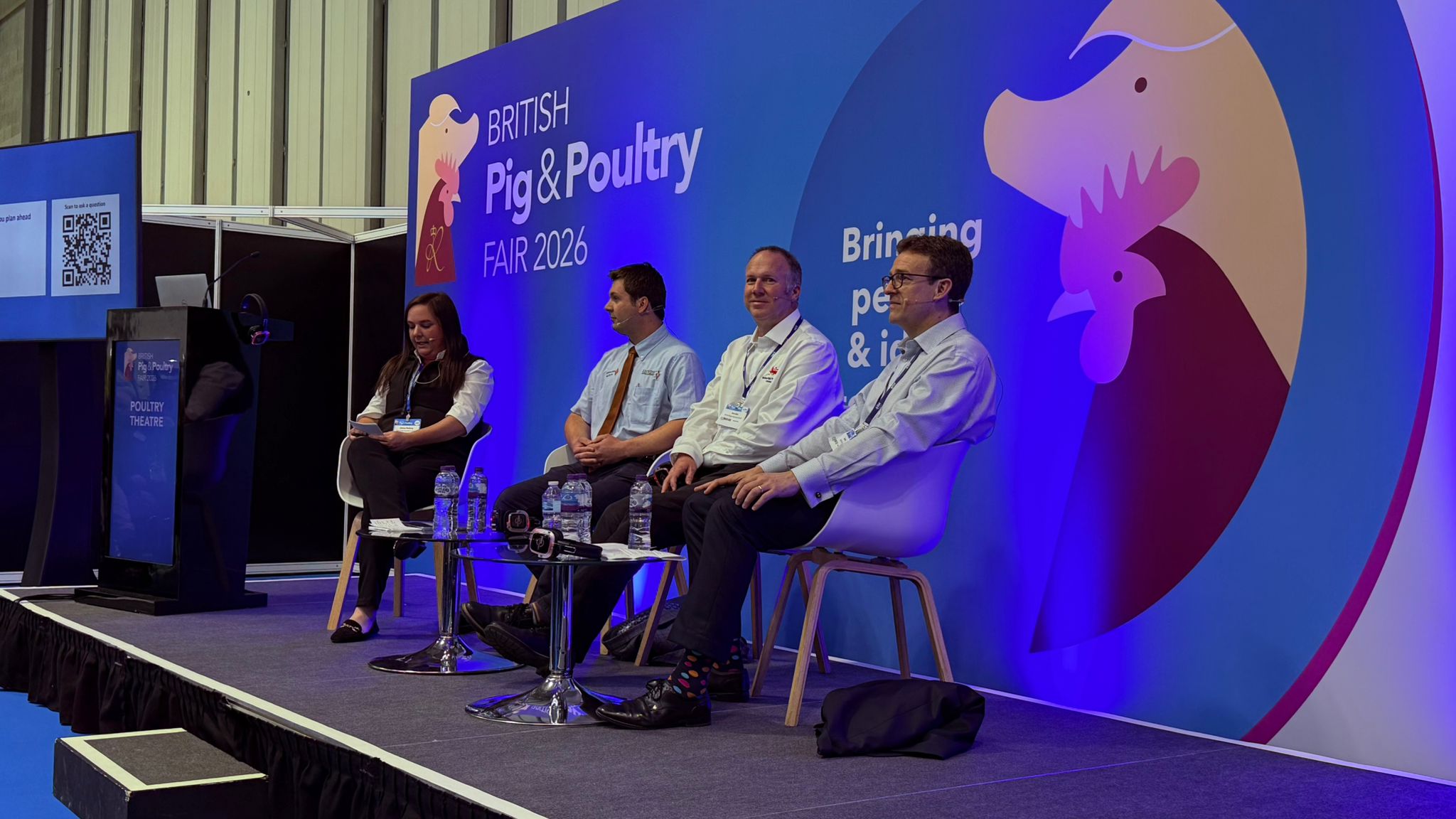
The discussion, chaired by Aimee Mahony of the NFU, featured Nick Allen of BEIC, Barney Kay of Noble Foods and Will Lea of Country Fresh Pullets
Rising egg consumption and changing consumer habits are creating major opportunities across the egg sector, according to panellists speaking during the Egg outlook – helping you plan ahead session at the Pig & Poultry Fair.The discussion, chaired by Aimee Mahony of the NFU, featured Nick Allen of BEIC, Barney Kay of Noble Foods and Will Lea of Country Fresh Pullets. Alongside growth opportunities, the panel also highlighted disease pressure, planning delays, pullet supply and regulation as major challenges facing producers.Nick Allen said UK egg consumption had now passed 200 eggs per person per year, reaching around 209 eggs per capita by the end of 2025.“One of my favourite stats is that about 27,500 eggs are consumed in one way or another per minute in the UK,” he said. “It really helps you understand just how important this sector is.”He said consumption growth was increasingly being driven by younger consumers, particularly those aged between 25 and 34, who were using eggs in a wider variety of meals and eating occasions.“Breakfast will always remain huge, but actually tempting people in with new recipes and dishes is something we really focus on,” he said. “That younger consumer is really driving the market.”Nick said eggs were now appearing across more than 10,000 retail SKUs, underlining how widely the product was being used throughout food retail and manufacturing.He also pointed to wider international trends discussed at the World Egg Organisation conference, including the continuing global demand for protein rich foods and the growing positioning of eggs as a natural health product.Barney Kay expanded on how those trends were translating into retail opportunities and product innovation.He said one of the strongest growth areas currently being seen in retail was convenience led egg products, particularly boiled eggs sold as snacks.“Do you know what the biggest growth area is in snacking at the moment from a retailer point of view? Boiled eggs in pots,” he said. “People on the go want something healthy, convenient and easy.”He explained that Noble Foods was seeing significant growth in boiled egg products through its processing operations, reflecting wider consumer demand for protein rich snacks and convenience foods.“We are seeing massive growth in boiled eggs,” he said. “It is that healthy on the go opportunity.”Barney also highlighted how demand growth was spreading across multiple egg categories, including branded shell eggs, organic eggs and added value products.He pointed to strong recent growth in Noble’s premium and branded ranges, including organic and speciality eggs, as consumers increasingly focused on health, nutrition and food quality.“There is great opportunity in egg innovation,” he said. “There is plenty to go at in liquid egg, prepared products and added value formats.”The discussion also explored how egg consumption could continue to rise further in the UK, with comparisons drawn to countries such as Mexico where annual consumption is significantly higher.Nick said the sector needed to continue building consumer confidence and telling a stronger story around nutrition, versatility and food safety.“The Lion has driven confidence for consumers,” he said. “It is about continually pushing that message out there with confidence and telling the story.”Disease threats, particularly avian influenza, were repeatedly identified as one of the sector’s biggest concerns.Barney said the industry had to focus on what remained within its control, particularly around practical biosecurity and training.“We are looking at what is within our control,” he said. “Training is fundamental. How do we support producers knowing what the key things are to focus on?”He said Noble Foods was working with biosecurity specialists Livetec to train staff and review key sites, while encouraging producers to think more critically about farm design, visitor access and contamination risks.“There is an awful lot you can do as businesses yourselves to keep disease out,” he said.Will Lea said the pullet rearing sector was facing its own particular pressures from disease controls and licensing restrictions, especially around bird movements.He explained that rearing farms often operated as multi age sites or mixed farms with cattle and sheep, creating additional complexity when disease restrictions were introduced.“Our biggest challenge is dealing with that and understanding the hurdles,” he said. “We cannot just pause the pullets in rear. They are destined for a laying farm and we have a very quick turnaround.”Will said licensing decisions could sometimes depend heavily on how farms were perceived on paper, including factors such as multi age sites or farm shops operating on the premises.“How it is perceived on an application can affect whether it is accepted or rejected,” he said.He added that greater understanding was needed from regulators and officials about how rearing farms operated in practice and the consequences delays could have across the supply chain.The panel also discussed the growing use of white egg layers and the implications this could have for future pullet demand.Will said demand for white pullets had grown rapidly in recent years and now accounted for a growing share of rearing activity.“As a business, Country Fresh Pullets has been doing about 12% white and that is growing every year,” he said.He explained that longer flock cycles for white birds had helped ease some pressure on rearing space because laying farms were keeping birds for extended periods.However, he also questioned whether consumers fully understood the differences between white and brown eggs and warned there could eventually be a risk of white eggs becoming viewed as a value product.Barney said retailers and producers were increasingly interested in white flocks because of advantages including longevity and feed conversion efficiency, although challenges remained around shell cleanliness and consumer perception.The panel also highlighted concerns around future rearing capacity, with Barney warning that investment in pullet rearing facilities was not currently keeping pace with planned expansion in laying capacity.“Rearing is going to be the pinch point for the industry,” he said.He argued there was a strong case for supporting the redevelopment of older step up rearing systems into modern multi tier systems that better matched laying environments and improved bird welfare.Planning and regulation were also highlighted as major barriers to future expansion, despite continued strong market demand.Barney said government needed to shift from trying to eliminate risk to managing risk practically and proportionately.“You cannot eliminate risk from a legislative point of view,” he said. “Risk is with us all the time.”Nick Allen added that producers and investors were struggling with a lack of certainty around future regulation, particularly in areas such as cage systems, organic standards and environmental policy.“There is no stability,” he said. “It always feels like one department is working against the other.”The panel suggested that future growth would come not only from increasing shell egg sales, but also from expanding egg use in prepared foods, snacking and foodservice.Barney said the sector needed to continue telling a positive story around eggs, particularly around nutrition, safety and convenience.“For me, there is great opportunity in egg innovation,” he said. “There is so much more to go at in terms of growth.”