

Dutch hen catching costs set to overtake spent hen value as leg-catching ban nears
Published on : 5 Oct 2026
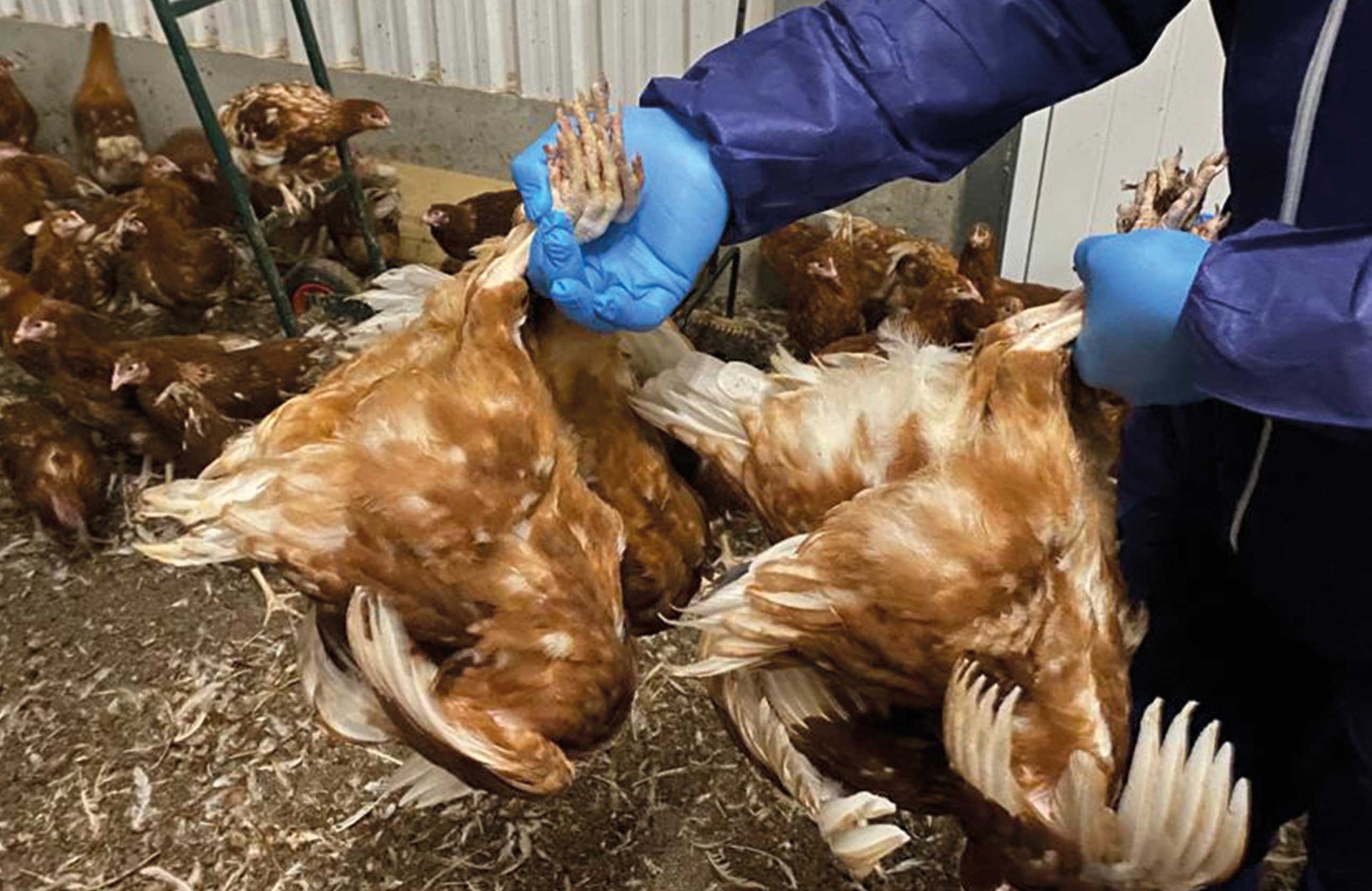 Dutch egg producers have 12 weeks before the NVWA begins fining catching crews €50 a bird for lifting hens by the legs, and new calculations suggest the switch to upright catching will cost more than the spent flock is worth.Depopulating a 35,000-hen aviary flock by upright catching will cost about €17,100, against the €15,750 the hens would fetch at €0.30/kg and 1.5kg a bird, according to calculations published by the German trade title top agrar on 3 October. The same flock costs about €8,100 to catch now, using 40 catchers over four and a half hours at €45 an hour, leaving the producer €7,650. Upright catching would need 60 catchers working about six hours plus a break, at around 100 hens per catcher per hour.The ban follows a ruling on 21 July by the College van Beroep voor het bedrijfsleven (CBb), the Netherlands' highest administrative court for trade and industry, in a case brought by the campaign group Wakker Dier. The court struck down an exemption the agriculture ministry had written into its enforcement orders against catching companies, which allowed hens to be lifted by two legs under conditions, finding it incompatible with EU transport rules. Regulation 1/2005 has banned lifting animals by the legs since 2007. The court set 1 January 2027 as the end date and raised the maximum penalty from €15,000 to €60,000, or €50 per bird caught wrongly.The NVWA confirmed on 8 September there will be no further transition period after 1 January, with repeat breaches triggering penalty payments directly. Catchers may still take hold of a bird's legs to restrain it, but lifting and carrying birds upside down by the legs is banned, and both producers and catching companies are liable. Avined, the Dutch poultry chain organisation, has advised producers to agree the catching method with their crews in writing, put it in work instructions and supervise catching themselves.Six Dutch sector organisations, including Avined, LTO/NOP and the NVP, said in July that the ruling did not do justice to the professional poultry chain, and pointed to the revision of the EU transport rules. The Commission's December 2023 proposal would allow poultry to be caught, lifted and carried by two legs, but it remains before the European Parliament's agriculture and transport committees and will not be in force by January.Flemish trial work gives an independent measure of the extra labour. The KIPVANG project, run by ILVO, Ghent University, Proefbedrijf Pluimveehouderij and Vetworks across seven layer flocks, found upright catching took 8.17 man-hours per 1,000 hens against 4.75 for conventional catching, and cost €7,984 for 20,000 hens against €4,506. Wing bruising fell from 1.73 per cent to 1.13 per cent and wing flapping was much reduced, whilst catchers reported more fatigue and felt less safe working in aviaries.Poultry service companies say there are not enough catchers to take every flock upright, and new catching teams would have to be trained. Jan Brok, coordinator of the Dutch Association of Poultry Service Companies (NVPSB), told the Dutch magazine Pluimveehouderij he could not imagine current standard practice in the Netherlands ending on 1 January. Producers and service companies regard the €60,000 maximum penalty as disproportionate, and producers say flocks for the next cycle were booked months ago.top agrar said forced moulting, at about €1.25 a hen for a six-week pause, only defers depopulation, whilst on-farm gassing is legal but expensive and still requires the birds to be caught first.The NVWA's spokesman Bjorn Elsebrock said the sector should ask itself whether killing birds on farm was desirable simply because catching costs no longer bore any relation to what the hens fetch.GB went the other wayGreat Britain has taken the opposite route. The Welfare of Animals (Transport) (Amendment) Regulations 2025, in force in England, Wales and Scotland since 22 July 2025, exempt chickens and turkeys of 5kg or less from the ban on lifting by the legs, provided birds are caught, lifted and carried by two legs and never one. Defra said at consultation that upright catching was not routinely performed in GB.The GB amendment does not extend to Northern Ireland, where Regulation 1/2005 continues to apply under the Windsor Framework through the Welfare of Animals (Transport) Regulations (Northern Ireland) 2006. That leaves Northern Ireland producers working to the same EU text the CBb has now ruled bans lifting by two legs.Sourcestop agrar, "Neue Fangregeln in den Niederlanden verbieten Überkopftragen", Alfons Deter, 3 October 2026. Costing of catching a 35,000-hen flock under current and upright methods, spent hen value, €50 per bird and €60,000 penalties, forced moulting and gassing alternatives, service company labour concerns, NVPSB coordinator Jan Brok's comments to Pluimveehouderij, and the NVWA's Bjorn Elsebrock quote.Recht.nl, "Geen uitzondering op verbod om kippen aan poten op te tillen", July 2026. Report of the CBb ruling of 21 July 2026 (ECLI:NL:CBB:2026:335) striking down the ministry's exemption, the 1 January 2027 deadline and the rise in maximum penalty from €15,000 to €60,000.Nieuwe Oogst, "Kippen vangen aan poten mag tot uiterlijk 1 januari 2027", 21 July 2026. Wakker Dier's case, the ban under EU Regulation 1/2005 since 2007, the per-bird penalty, and the joint response of Avined, Nepluvi, Anevei, LTO/NOP, NVP and COBK pointing to the EU transport revision.Nieuwe Oogst, "Pluimveesector heeft nog vier maanden om vangen aan poten te stoppen", 8 September 2026. NVWA confirmation of no further transition after 1 January 2027, restraint by the legs still permitted, and Avined's advice to producers.Pluimveeloket, "Rechtop vangen geeft enkele verbeteringen in dierenwelzijn, maar doet het aantal manuren ook stijgen", KIPVANG project results (ILVO, UGent, Proefbedrijf Pluimveehouderij, Vetworks), 2023. Man-hours per 1,000 layers, cost per 20,000 hens, wing bruising and catcher fatigue under upright and conventional catching.FACE, "New EU rules on animal transport: challenges and perspectives", European Parliament event, 21 April 2026. Status of the EU transport proposal before the Parliament's AGRI and TRAN committees.EUR-Lex, European Commission proposal COM(2023) 770 on the protection of animals during transport, December 2023. Proposed provision allowing poultry to be caught, lifted and carried by two legs.Welsh Government, "Written Statement: The Welfare of Animals (Transport) (Amendment) Regulations 2025", 3 July 2025. GB exemption for chickens and turkeys of 5kg or less to be lifted by two legs, commencement on 22 July 2025, and scope covering England, Wales and Scotland.Defra, "Poultry catching and handling consultation", March 2025. Statement that upright catching is not routinely performed in Great Britain.Northern Ireland Assembly, DAERA submission to the Windsor Framework Democratic Scrutiny Committee on COM(2023) 770, 15 May 2025. Confirmation that Regulation 1/2005 applies in Northern Ireland through the Welfare of Animals (Transport) Regulations (Northern Ireland) 2006.