

Build your war chest
Published on : 17 Jul 2026
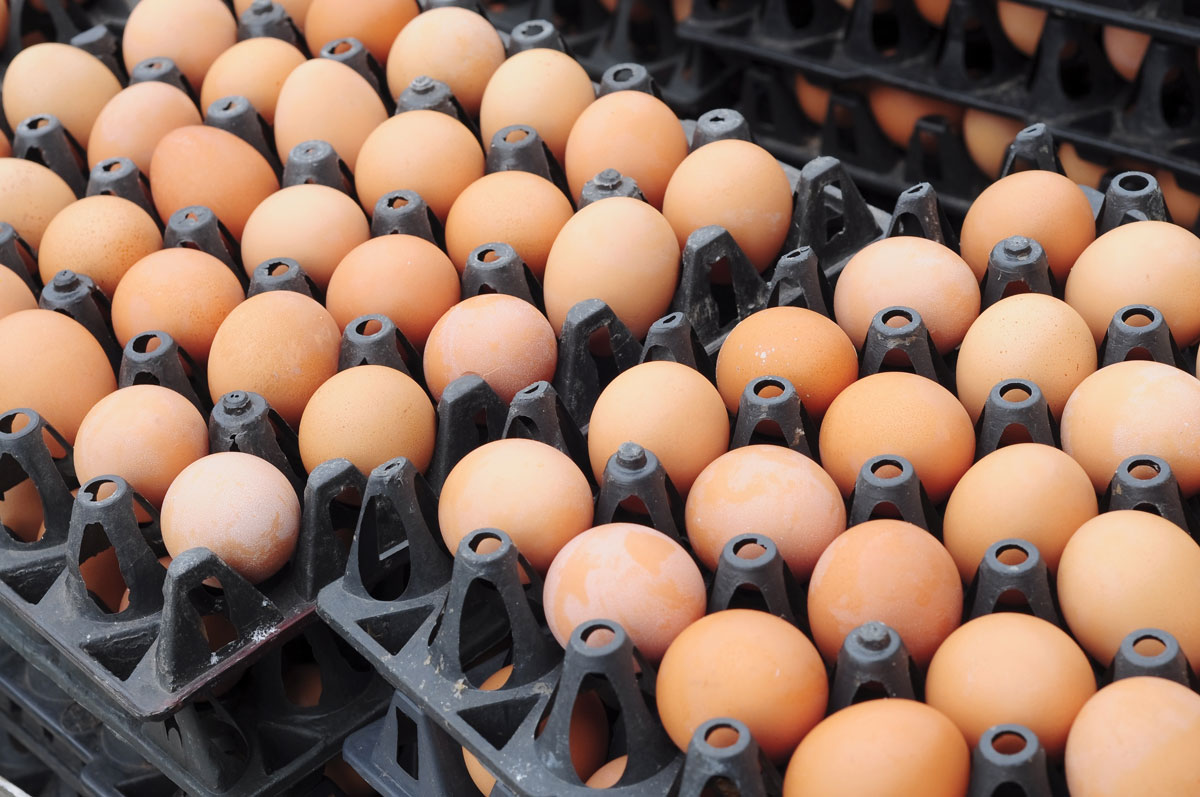
What will the sector do with the fruits of this current purple patch?
Is this the best egg market UK producers have ever seen? Is it the new normal, or just a window that's about to close? Either way, what the sector does with it now will shape what comes next.Let's deal with the first question. UK free-range producers are currently enjoying returns that haven't been seen in a generation. The ADAS free-range figure for July 2026 stands at 158.32p a dozen. Defra's official Q1 2026 average across all production methods was 154p, up 3.9% year on year. BFREPA's own producer survey put the average brown free-range price at 155.6p in December 2025 — a number that would have seemed fanciful five years ago. Production hit a record in Q1 2026, and demand keeps climbing structurally rather than seasonally. All of it genuinely good news.So the real question is what the sector does with the fruits of it. Not what individual producers do with their own books — that's between them and their accountants — but what the sector has actually learned, collectively, from the cycles it's lived through before. Is this period of exceptional returns being used to build reserves, or is everyone quietly assuming the hard years are behind us? And it's not just down to the producer, who still sits at the price-taking end of the chain, to get this right. Packers, retailers and the wider supply chain all have a part to play.The market has a longer memory than the sector sometimes credits it withRewind to 2019 and the average UK farmgate egg price sat around 80p a dozen, having been eroded steadily for four years running. Producers and packers went under. New entrants who'd built sheds on the strength of retailers' cage-free commitments found the market didn't honour the assumptions those commitments implied. Contracts were stacked against producers, and in some corners a verbal handshake still passed for an agreement. Parts of the sector were, frankly, in genuine trouble.That was seven years ago — not long at all in the life of a poultry shed, a bank loan or a family farming business.None of the current strength has come from the sector suddenly managing itself better. It's arrived through a chain of events largely outside anyone's control: conflict-driven cost shocks, HPAI losses, and colony cage volume leaving the market ahead of its regulatory deadline. Between them they knocked the stability out of UK egg production fast enough that supply and demand swung out of sync, and the market repriced itself hard.Supply shocks, though, tend to resolve themselves eventually. The real question isn't whether supply recovers — it will — but what happens to prices when it does, and whether producers are financially ready for that moment when it lands.Vague warnings about hard times ahead don't help anyone. Specific ones might.Feed remains the single biggest variable in egg production economics, and it's stayed stubbornly high with little sign of easing. The Middle East conflict continues to weigh on feed ingredient markets. Rabobank's Q2 2026 Global Poultry outlook flagged geopolitical uncertainty, potential El Niño disruption and feed cost volatility as the main risks facing the global sector through the rest of 2026 and into 2027.Import competition hasn't gone away because someone wrote a good report about it. UK egg imports are up sixty percent since 2021, and the regulatory position on border equivalence remains unchanged as of mid-2026. Eggs from conventional battery systems — banned here since 2012 — still enter the food manufacturing chain at scale. If government's response to the industry's border control campaign falls short, expect that flow to grow as domestic colony cage supply keeps shrinking ahead of the 2032 phase-out.HPAI, meanwhile, isn't a seasonal scare any more. It's endemic in the wild bird population across Europe and has become a permanent operating condition — biosecurity now a daily task rather than a winter precaution, one that costs money, demands constant attention, and can still fail. A bad HPAI season doesn't hit everyone the same way; some lose birds, others sell into the resulting tight market. The only real hedge against the former is financial resilience.Consumers, so far, have absorbed higher retail prices without trading down in any meaningful way. But household budgets aren't infinite, and the pressure on UK consumer spending hasn't disappeared. It wouldn't take much softening in willingness to pay the free-range premium to hit farmgate prices hard once supply starts to recover.And regulatory cost is coming regardless of whether producers are ready for it: the colony cage phase-out, the Fair Dealing Regulations, evolving welfare standards, environmental stewardship requirements on outdoor land, possible beak-trimming legislation. Every one of these carries a cost. None of them arrives with a price rise attached to cover it.There's a useful comparison to draw with 2017 to 2021, a genuinely tough stretch for many free-range producers. Input costs climbed, egg prices didn't keep up, and HPAI caused periodic disruption, even if less severe than the 2023–2025 seasons. Producers who came through that period without lasting damage tended to share a few traits.They carried manageable debt — not necessarily low debt, since plenty had invested heavily in buildings, but debt sized so the business could service it through compressed margins without breaching banking covenants or being forced into a fire sale.They knew their own cost of production cold. Not the ADAS benchmark, useful as that reference point is, but their own number, built from their own inputs and kept current. There's a real gap between a producer who knows their break-even price to the penny and one who just knows prices are “good” — it's the difference between making informed calls under pressure and reacting once it's already too late.And they hadn't spent every penny of the good years. The cyclical nature of agricultural markets isn't news to anyone in this sector. The producers who treated above-average returns as a chance to build reserves, rather than expand as fast as possible, were generally the ones who still had options when things turned.None of that takes exceptional financial sophistication. It just takes discipline at the exact moment discipline is easiest to put off, because the numbers look healthy.It's a view the banks themselves share. Martin Hanson, head of agricultural banking at HSBC, says lenders are already looking past the current price strength to how a business would cope if it reversed.“Banks will sense-check whether debt remains affordable by stress-testing for changes in input costs, commodity prices and any periods of production interruption. When you're planning, engage early with your accountant and your bank to understand what funding may be available. Having a clear grip on your cost of production — and the components that drive it — is essential. Lenders will benchmark this against peers and industry averages to understand how resilient the business is, including how it might cope if egg prices fall.”What building a war chest actually looks likeDebt reduction is the most obvious use of current cash. A producer who pays down borrowing now carries a lower fixed cost base once prices soften — and a lower fixed cost base means a lower break-even price, which means more pricing scenarios become survivable. Simple arithmetic.Selective infrastructure investment has its place too, but the word doing the work there is “selective.” Spending on things that cut ongoing costs — efficient ventilation, better biosecurity, replacing shed fabric that's on its last legs — is a different proposition to spending on extra capacity just because the market currently supports it. Chasing capacity because prices are good is exactly the decision that produced the oversupply mess of 2017–2019. Capacity calls should be driven by where demand is heading long-term and where an individual business sits, not by this quarter's price.Working capital discipline is unglamorous but it matters: knowing your costs, watching margin, keeping headroom with the bank. It's the difference between a business that can shrug off a bad quarter and one that can't. HPAI doesn't call ahead. Feed spikes don't wait politely for contracts to come up for renewal. The buffer that lets a business absorb a shock without being forced into irreversible decisions has to be built beforehand, not during.And cash reserves buy something a difficult market can't sell back to you: time. A producer sitting on six months of operating costs has six months to make good decisions when prices fall. One running on thin working capital has to decide in a hurry — and rushed decisions are rarely the best ones.Hanson's own advice to producers lines up closely with that logic.“The best way to strengthen resilience is to focus on efficiency — marginal gains really do add up. Where you can, build flexibility into production so you can scale up or down as the market changes, with minimal disruption and cost. If retained profits allow, paying down debt is an option, as is investing in more efficient technology and maintaining strong biosecurity — not just mending the roof while the sun shines, but replacing it with something more efficient and resilient. And chasing turnover for its own sake should be questioned unless it's part of a clear long-term strategy. Maintaining cash reserves is also a prudent policy.”Is building a war chest a negative messageNone of this is a case for pessimism about free-range's prospects. Far from it. UK egg consumption is on a growth trajectory that looks structural rather than a passing trend. The Lion scheme remains one of the more credible food safety assurance systems in UK food production. Free-range welfare standards give UK eggs a genuine, defensible quality edge over imported alternatives — one that's becoming more visible to informed shoppers. And the share of product value flowing back to the farm has improved, durably, helped by ADAS's tracking of contract models.The Fair Dealing Regulations, once finalised, should bring contract protections the sector has long lacked. BFREPA, BEIC and the wider producer representation are better resourced and more commercially switched-on than they were a decade ago. By any honest reading, the sector's long-term demand picture looks good.Which is precisely the moment to build resilience — not because the sector is heading for trouble, but because it's heading, as it always has, into another cycle. Strong returns followed by tighter margins is the pattern this industry has lived through more than once. The businesses left standing tend to be the ones that didn't mistake a good run for a permanent state of affairs.Right now the sector is in the strongest financial position it's occupied in a generation. What it does with that position will decide who's still standing, and in what shape, when the next difficult stretch arrives.The war chest won't build itself.