

BFREPA supports planning reform to meet demand for British eggs
Published on : 18 Dec 2025
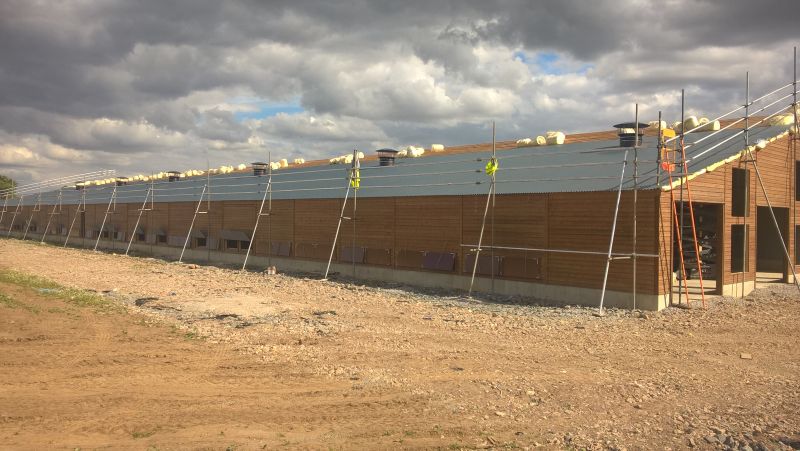 BFREPA has welcomed the government’s consultation on reforms to the National Planning Policy Framework, highlighting the need for a faster, fairer and more certain planning system to unlock investment in modern poultry infrastructure and support the growth of high-welfare, affordable British egg production.The government’s decision to consult on reforms to the National Planning Policy Framework is a welcome recognition that the planning system is not working as it should for rural businesses. For too long, farmers and food producers have faced unnecessary delay, uncertainty and cost when seeking permission for essential development, even where proposals are modest, well-designed and fundamental to the operation of their businesses. A planning framework that actively supports productive agriculture is long overdue.The direction of travel set out in the consultation points towards a more practical and proportionate approach to development in the countryside. A clearer presumption in favour of agricultural development in rural areas has the potential to change how applications are assessed on the ground, helping to speed up decision-making while giving applicants greater confidence in the likely outcome. For poultry producers, this additional certainty is critical. Investment decisions often run into millions of pounds, and delays or refusals late in the process can stall progress for years. A system that provides clearer signals from the outset will allow businesses to plan, invest and grow with confidence.This matters because the poultry sector must continue to expand and modernise to meet rising demand for high-quality, affordable British eggs. Consumers increasingly expect strong welfare standards, environmental responsibility and traceability, all of which rely on modern infrastructure. Without timely planning approvals for new and replacement housing, producers are constrained in their ability to increase capacity, improve efficiency or respond to market demand. A faster, more predictable planning system is therefore not simply about convenience — it is fundamental to the sector’s ability to deliver food security and remain competitive.The current system has too often left farmers in limbo, even where applications are well evidenced and supported by technical assessments. This lack of certainty discourages investment and undermines growth at a time when the rural economy needs it most. As the British Free Range Egg Producers Association has highlighted, the pace and cost of planning have become major obstacles to progress. BFREPA welcomes the consultation, noting that the existing system is too slow, too expensive and fails to provide farmers with confidence, even when they have a strong case. In many instances it actively suppresses expansion; in others, it simply does not function as intended.Gary Ford, Head of Producer Engagement and Strategy at BFREPA, captured the strength of feeling within the sector, saying:“BFREPA is pleased that the government has launched this consultation – a consultation which will hopefully help bring to an end decades of red tape, delays, cost and frustration that too many farmers are experiencing as a result of the current system when all they want to do is grow their business. Poultry farmers are increasingly losing faith with the planning system and the government’s lack of acknowledgement that UK produced food is the best and that our rural economy needs nurture at the present time.”While the overall intent of the proposed reforms is widely welcomed, planning professionals caution that significant challenges remain. Sam Harrison of Harrison Pick Planning Consultants highlighted that policy clarity will be critical if the reforms are to translate into real-world change, commenting:“The proposed changes to the NPPF are generally welcomed, particularly the clearer recognition of the need to support modern, welfare-led livestock accommodation. However, the revisions do not resolve the fundamental and long-standing ambiguities that continue to undermine decision-making for livestock applications. In practice, positive policy support is routinely overridden by unclear and increasingly restrictive interpretations of environmental policies relating to ecology, SSSIs, Local Wildlife Sites and ancient woodland, particularly in the absence of clear, consistent thresholds for air quality and ammonia impacts. The lack of alignment between planning policy, environmental guidance and permitting regimes, coupled with continued uncertainty around the treatment of matters such as agricultural manures and slurries, means that the changes risk perpetuating the current impasse rather than resolving it. Without clearer and more proportionate policy direction, the planning system will continue to struggle to deliver essential agricultural development despite the otherwise positive intent of the NPPF revisions.”Investment in new poultry buildings is central to unlocking growth in the sector. Modern housing enables producers to adopt the latest technology, improve welfare outcomes, enhance productivity and reduce environmental impact through better energy efficiency, ventilation and waste management. These improvements are essential if the industry is to scale up responsibly while maintaining the standards that British consumers rightly expect. When planning becomes a barrier to that investment, progress stalls — not just for individual businesses, but for the wider supply chain.The consultation also signals a more pragmatic approach to environmental policy within planning, including a review of how Biodiversity Net Gain (BNG) applies to smaller sites and how off-site delivery can be made simpler and more affordable. Poultry producers are already heavily engaged in environmental stewardship, and clearer, more proportionate rules would allow them to continue delivering biodiversity gains while focusing on food production and rural employment.Taken together, the proposals offer the prospect of a planning system that works with farming rather than against it. By reducing delays, cutting unnecessary cost and providing greater certainty, the reforms could help unlock the investment needed to grow the poultry sector sustainably. That growth is essential if the UK is to meet increasing demand for quality, affordable British eggs, strengthen the rural economy and ensure that domestic food production remains resilient for the future.